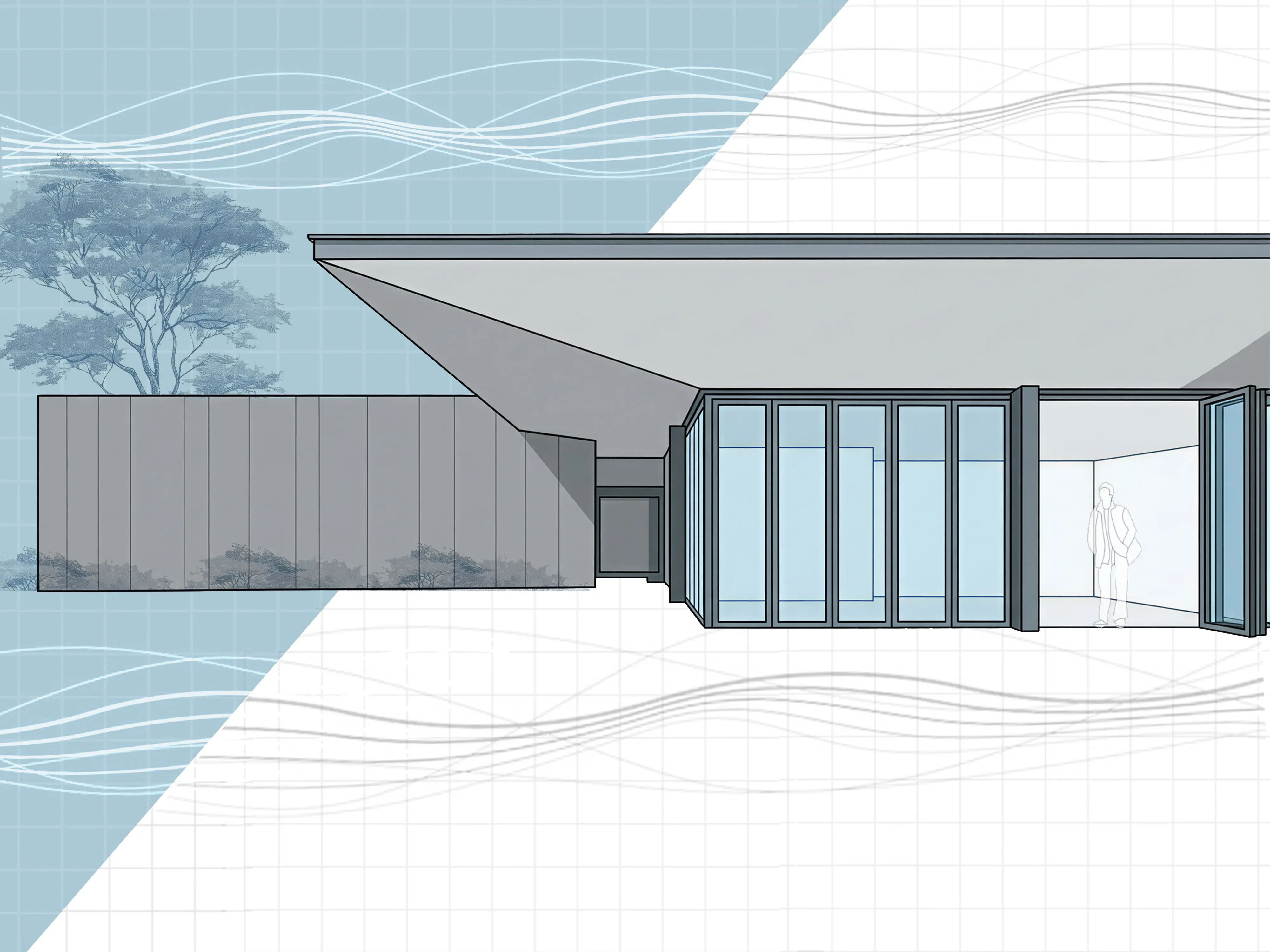
12.0 house
farmhouse
concept
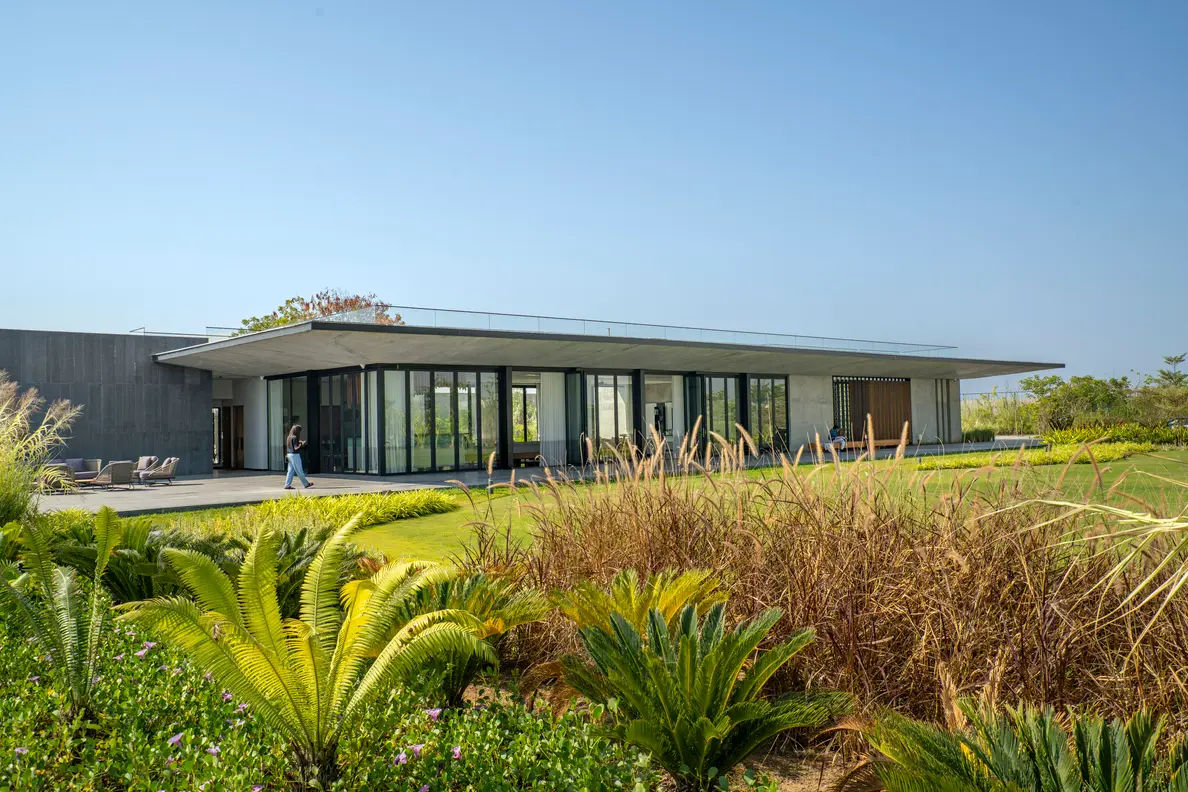
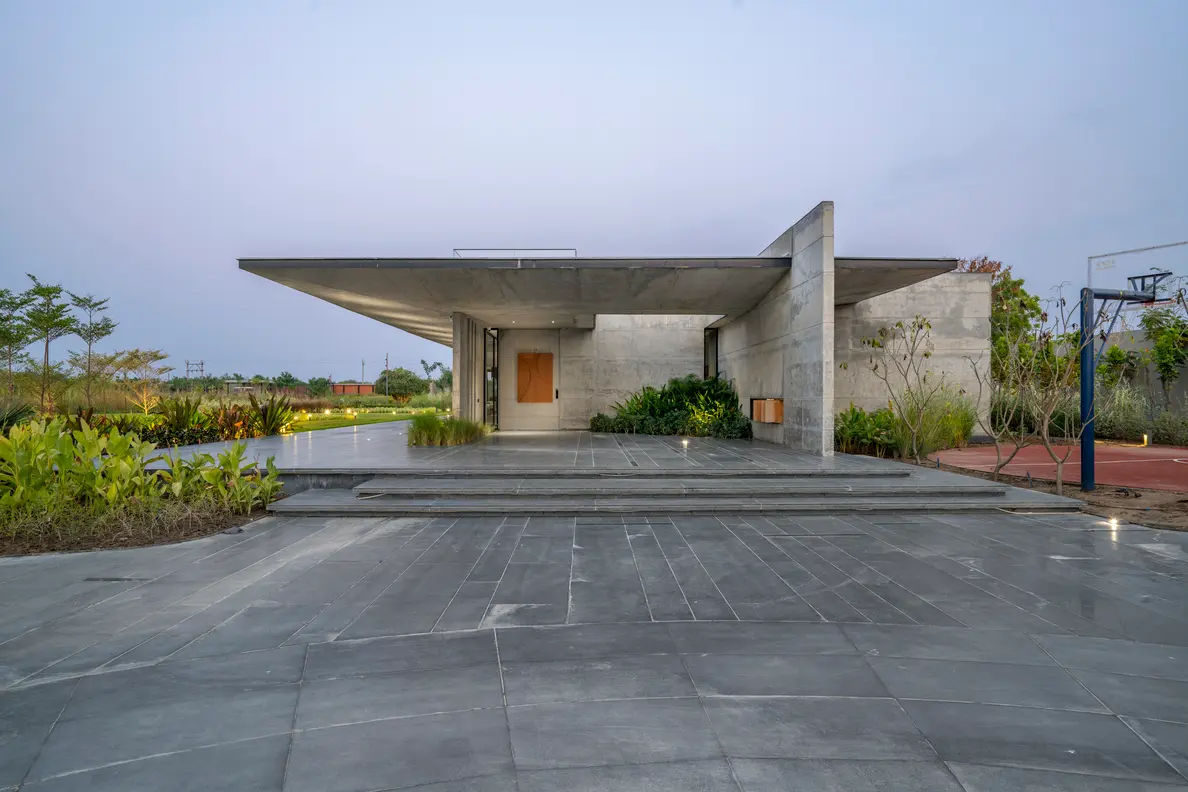
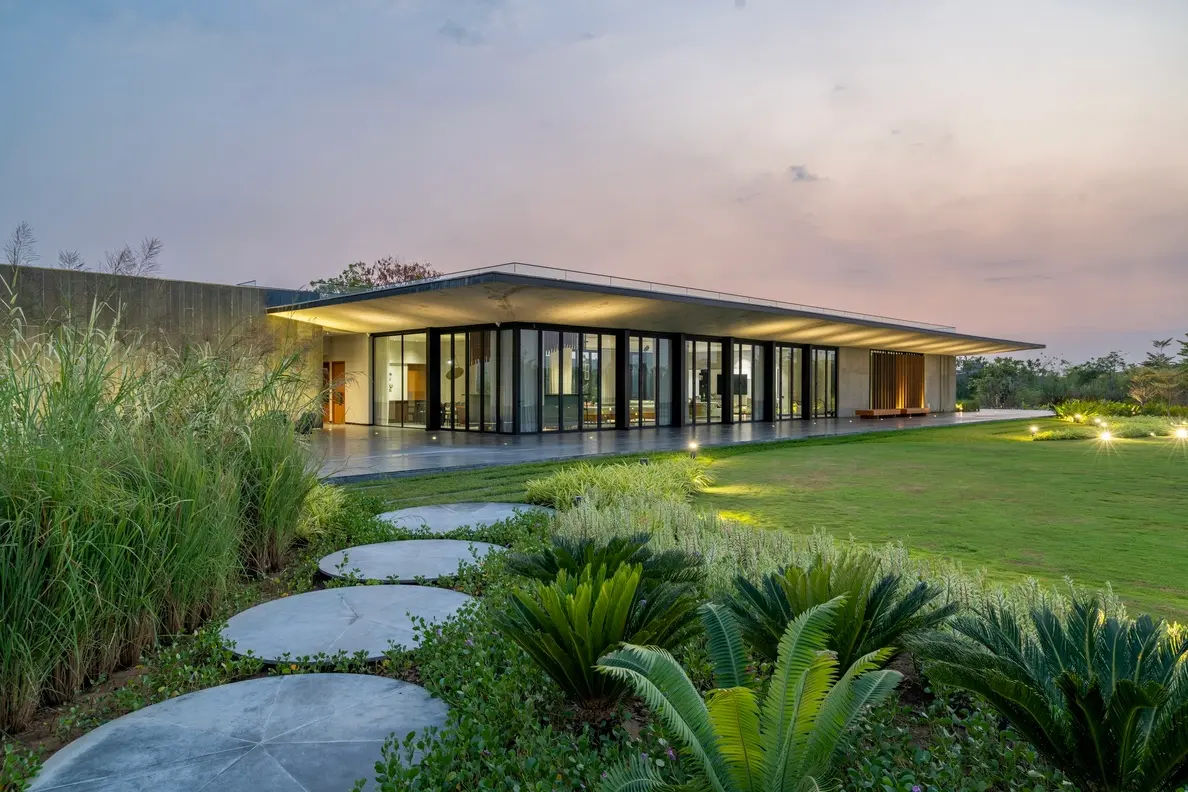
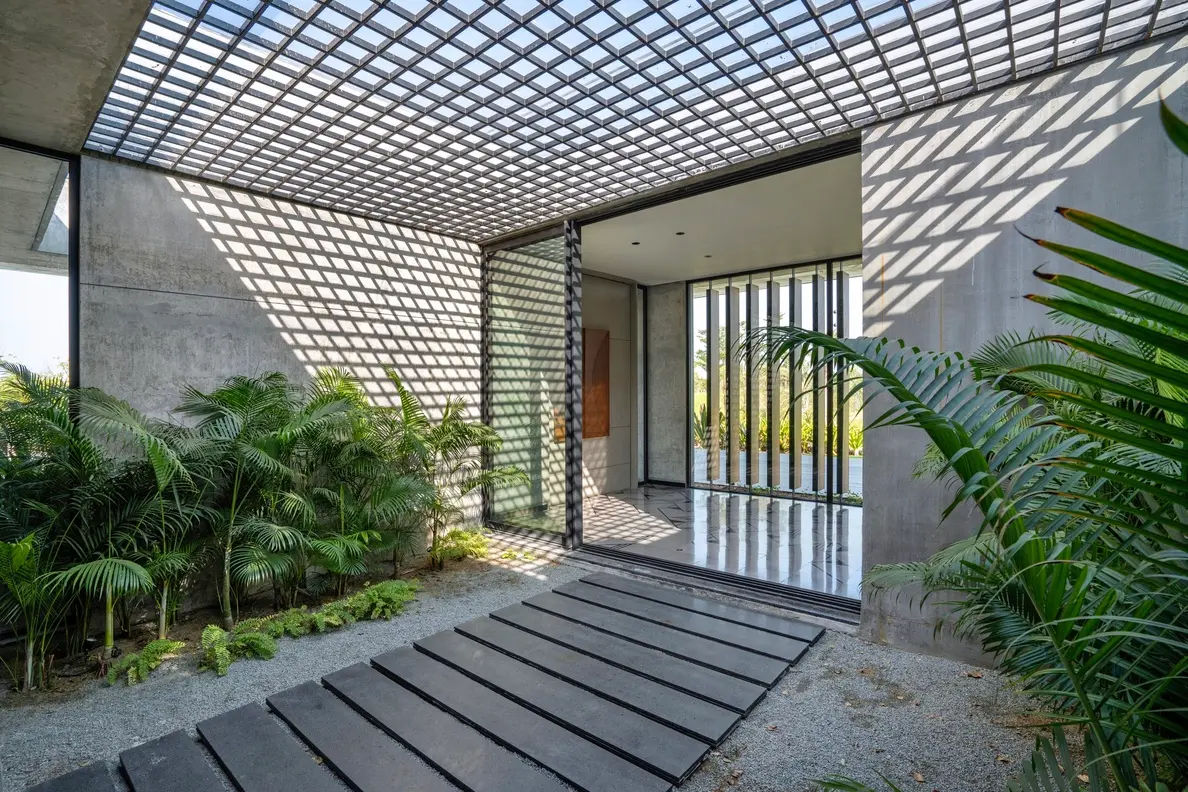
12.0 House is imagined as a pavilion for living within the wetlands—an architecture shaped by horizon lines, climate, and collective life. Located in the scrubland of kanjari Village, the house emerges from a simple yet powerful idea: to live under one continuous shade while remaining visually and physically connected to the land. The 12-foot inverted cantilever becomes both shelter and identity, casting a deep horizontal edge that frames the vast landscape and defines the home’s name. Conceived around openness and adaptability, the residence allows gatherings to expand freely while maintaining moments of retreat, positioning nature not as a backdrop but as the primary spatial experience.
design
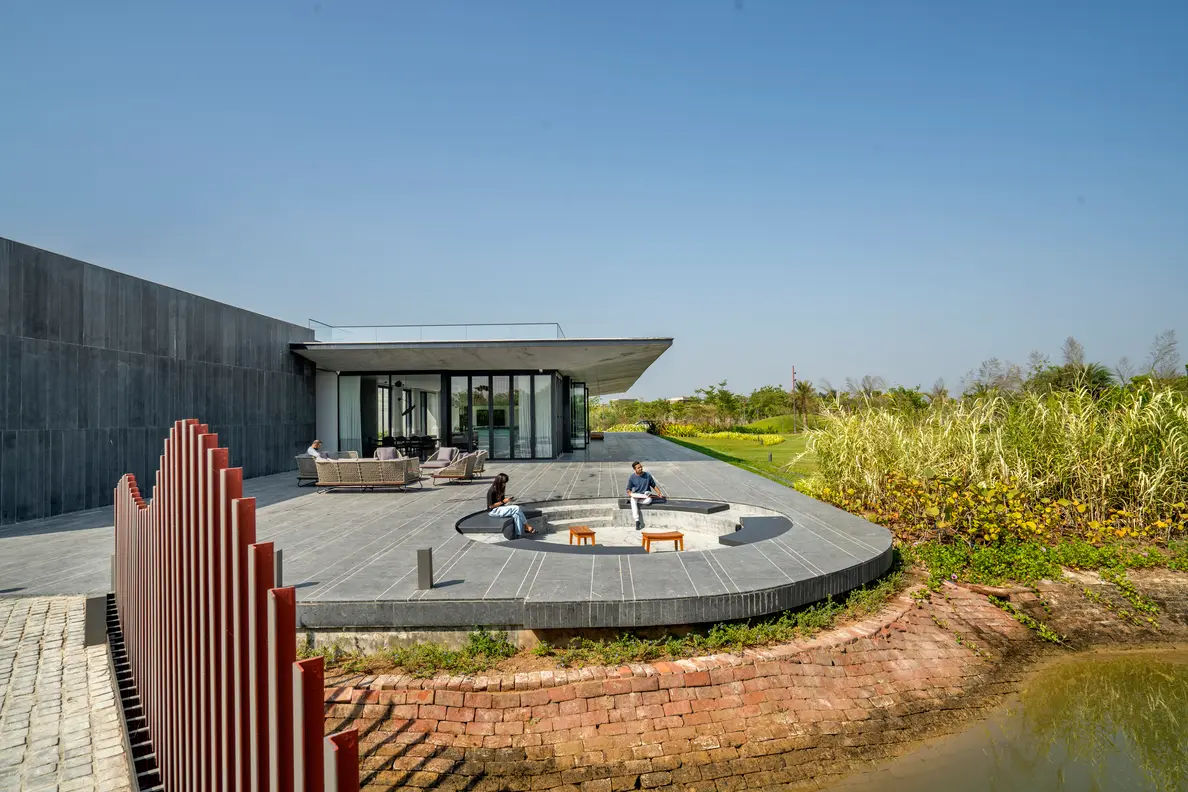
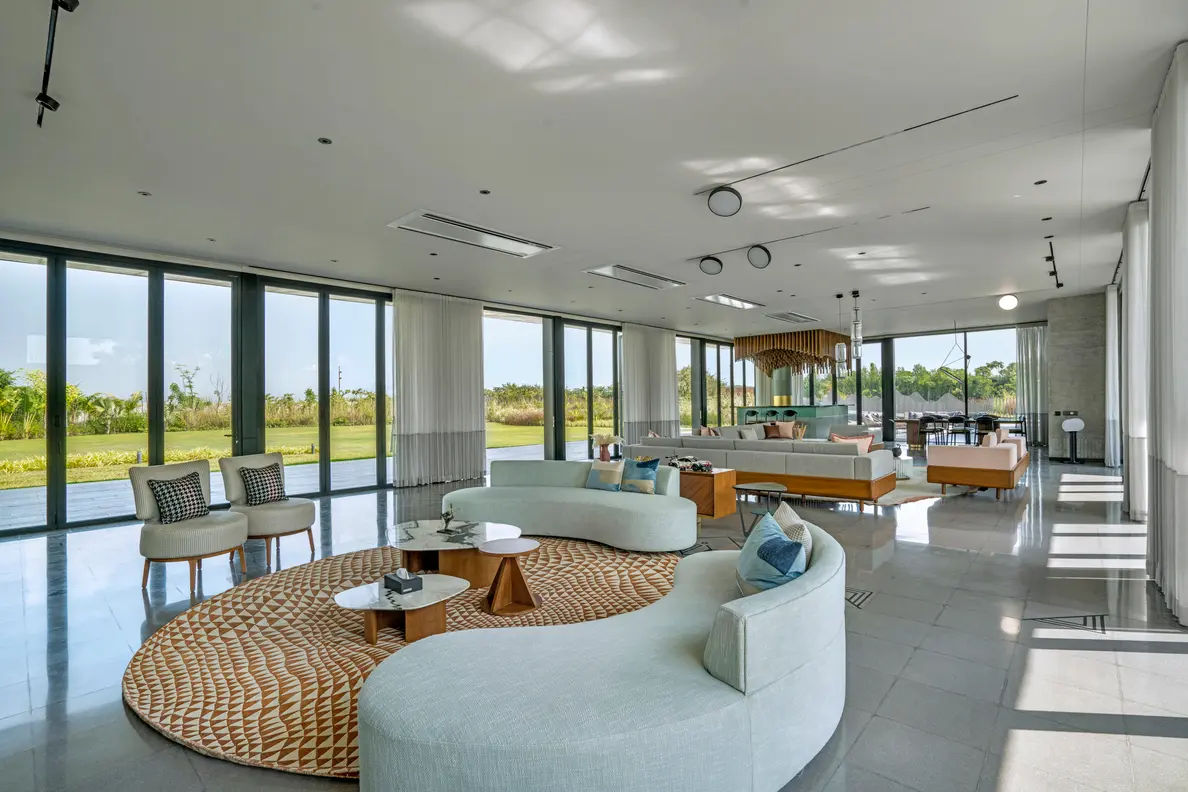
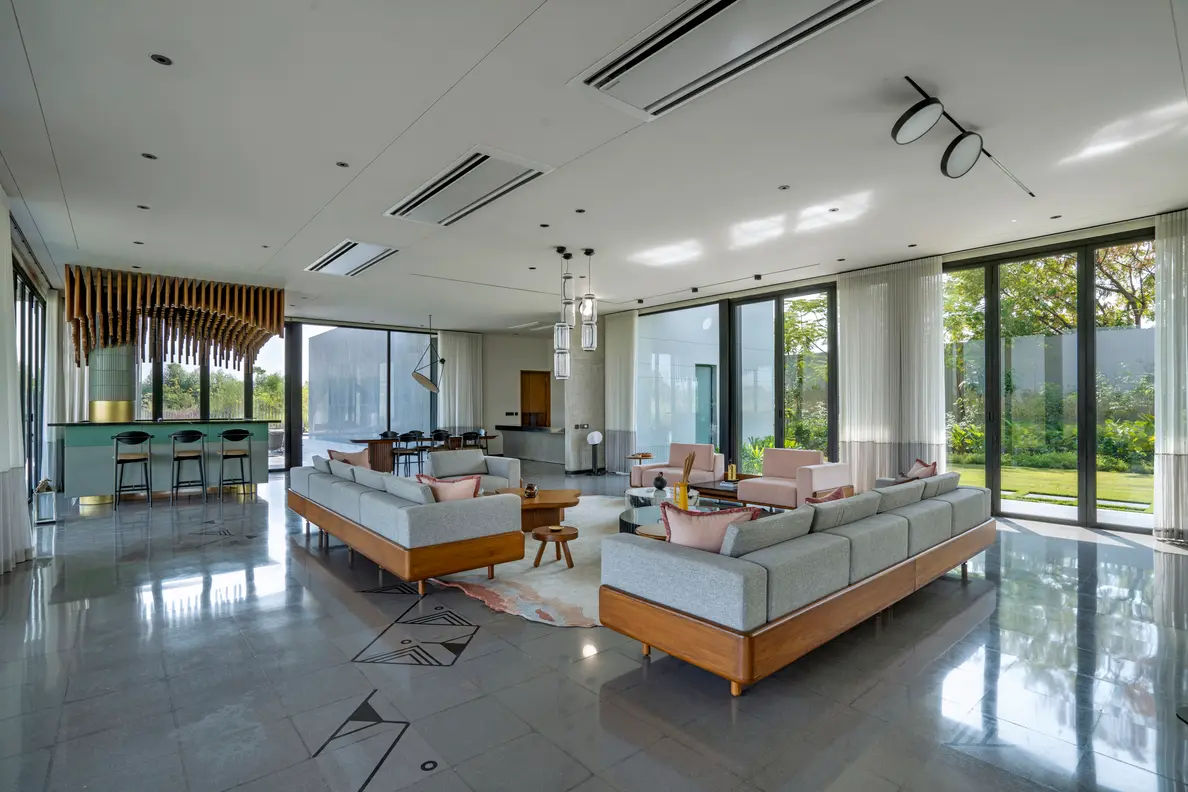
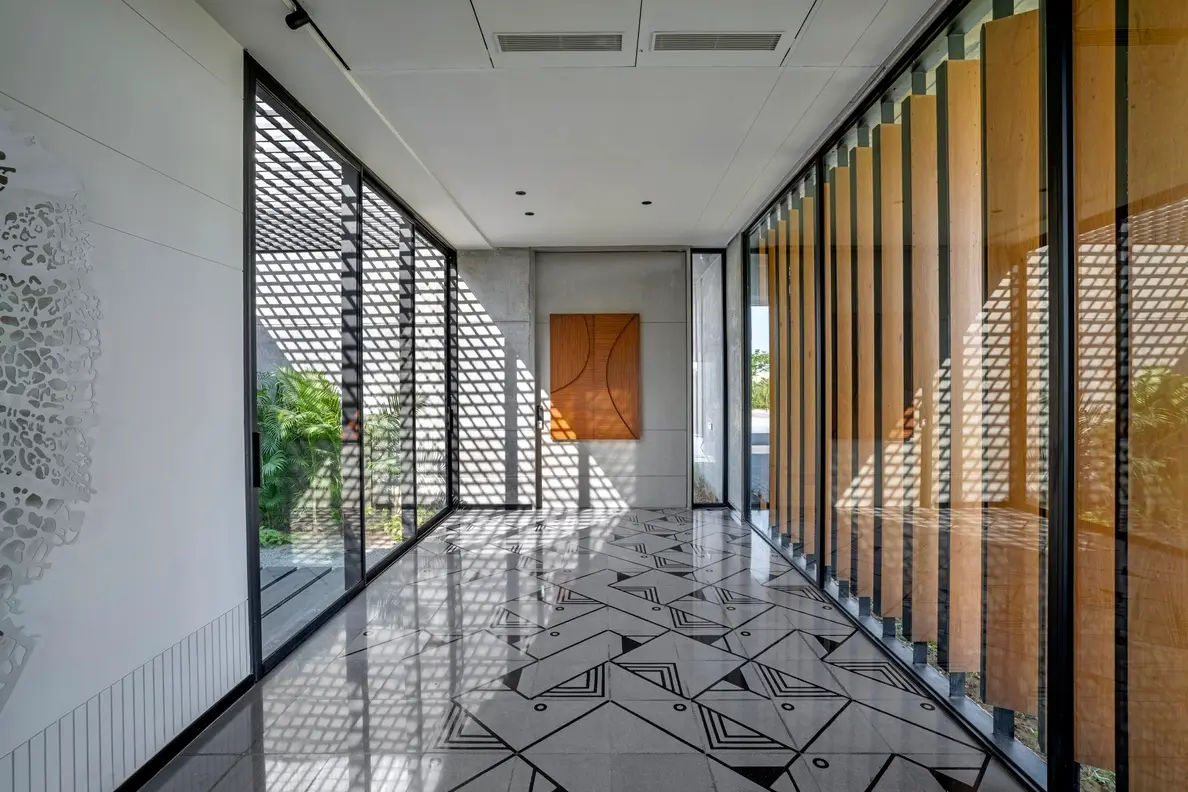
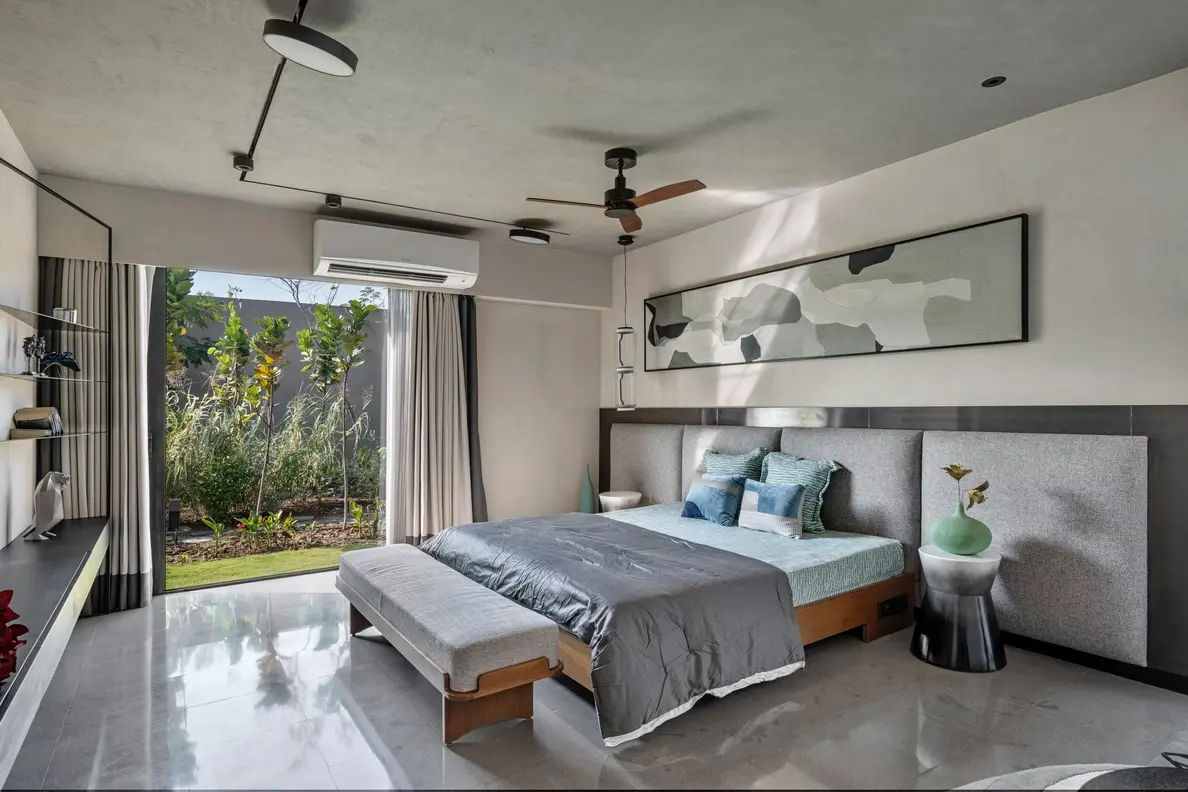
The house unfolds as three interlinked zones—gathering, private living, and services—arranged in a clear, legible plan that prioritizes flow and visibility. Full-height sliding and folding glass panels dissolve the boundary between interior and exterior, enabling the living space to extend effortlessly into decks, a sunken court, and the party lawn. A central open-to-sky courtyard mediates between social and private areas, introducing light, air, and pause into the plan. Interiors are intentionally minimal, allowing views to dominate, with terrazzo floors, soft-toned furnishings, and a striking parametric wooden ceiling in the dry kitchen acting as a focal moment. Beyond the built form, the landscape is choreographed as a self-sustaining habitat—housing orchards, vegetable gardens, dense plantations, and a large rainwater reservoir—supporting biodiversity while reinforcing the house as a system that lives with its environment rather than upon it.
Click to view
Click to view
Click to view
Click to view
Click to view
Click to view
Click to view
Click to view
Click to view
project details
location
ahmedabad,gujarat
typology
residential
status
Completed
additional disciplines
Architecture • Interior • Landscape
client
Mr. Ankur Garg
year
2022
area
235050 sq.ft.
keywords
interlinked zones inverted cantileverterrazzoparametric wooden ceiling self-sustaining habitatsunken courtminimaldense plantations
project team
similar projects
maheshwari residence
Indore,madhya pradesh • 2025
PT house
ahmedabad,gujarat • 2019
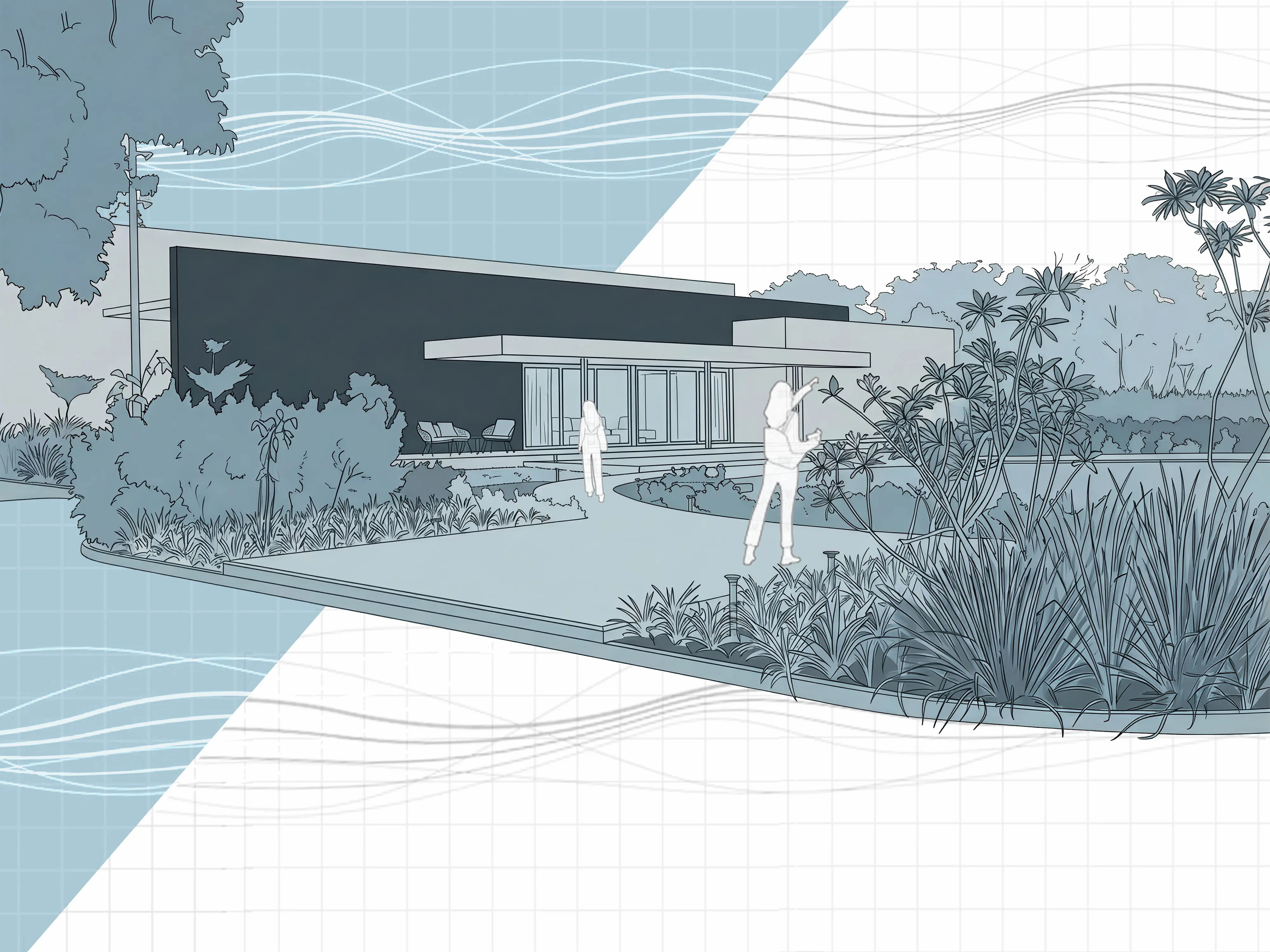
the parallel house
ahmedabad,gujarat • 2021
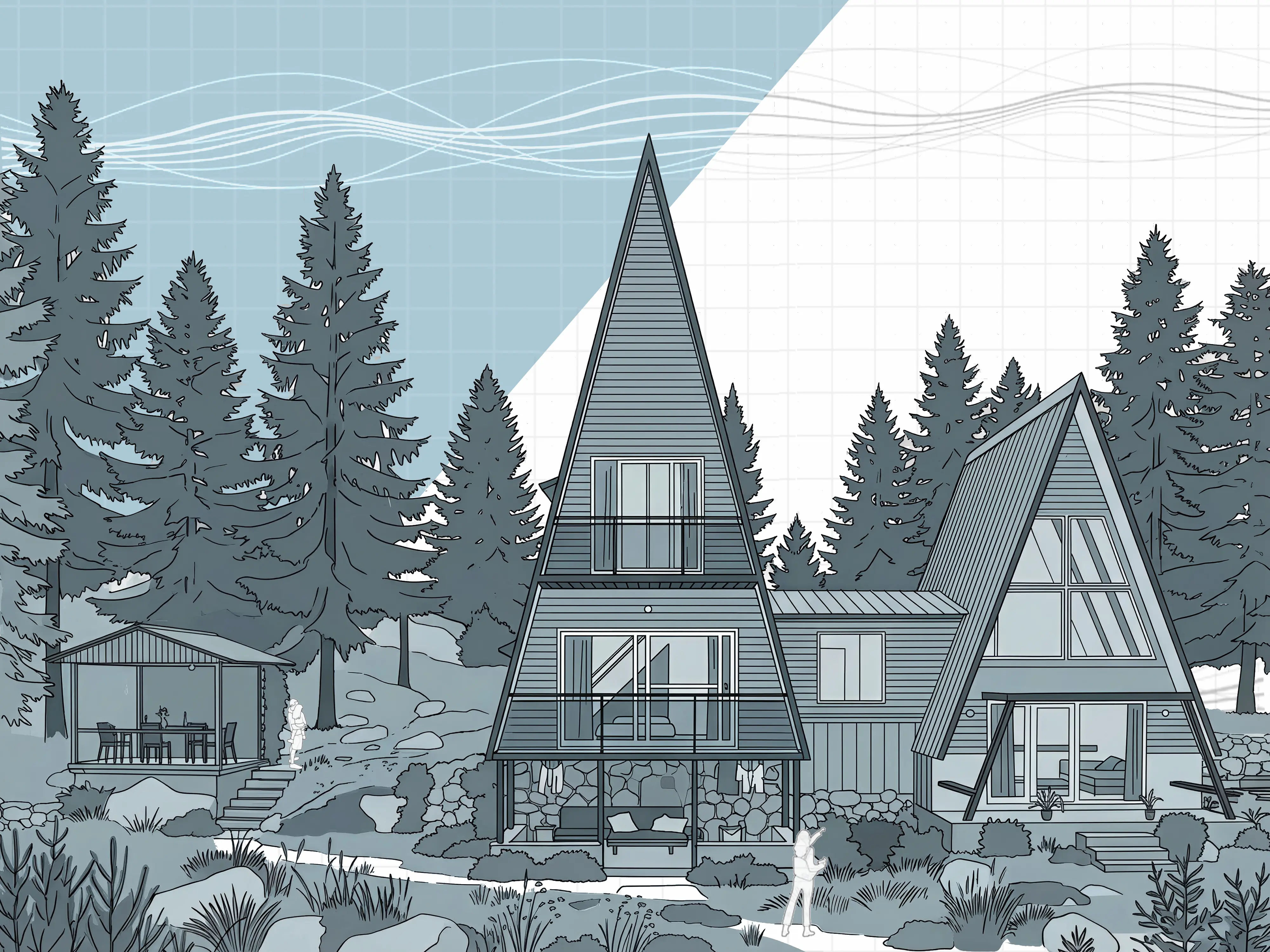
uttara
dhanachuli,uttarakhand • 2024
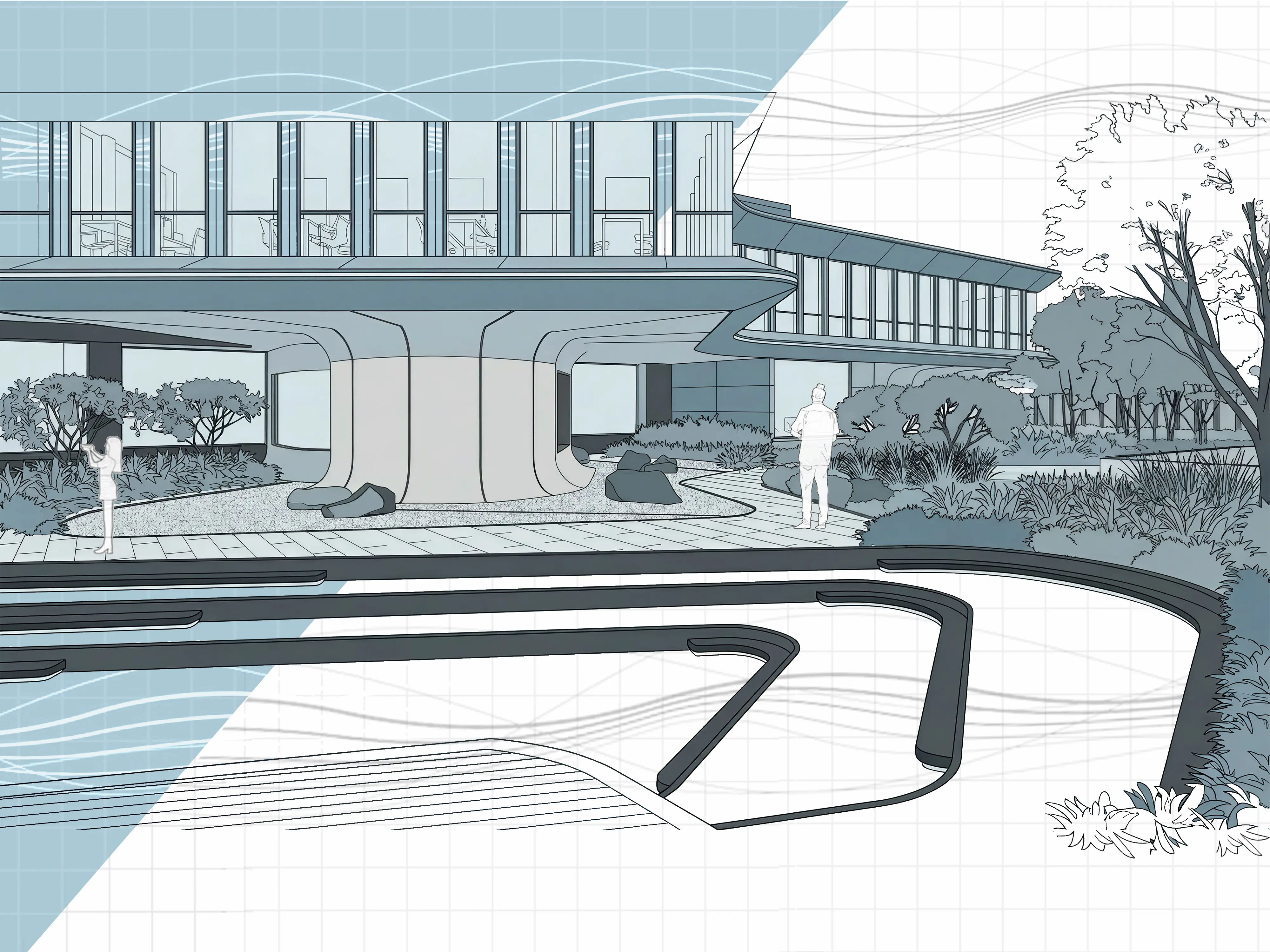
ub heritage corporate
ahmedabad,gujarat • 2024
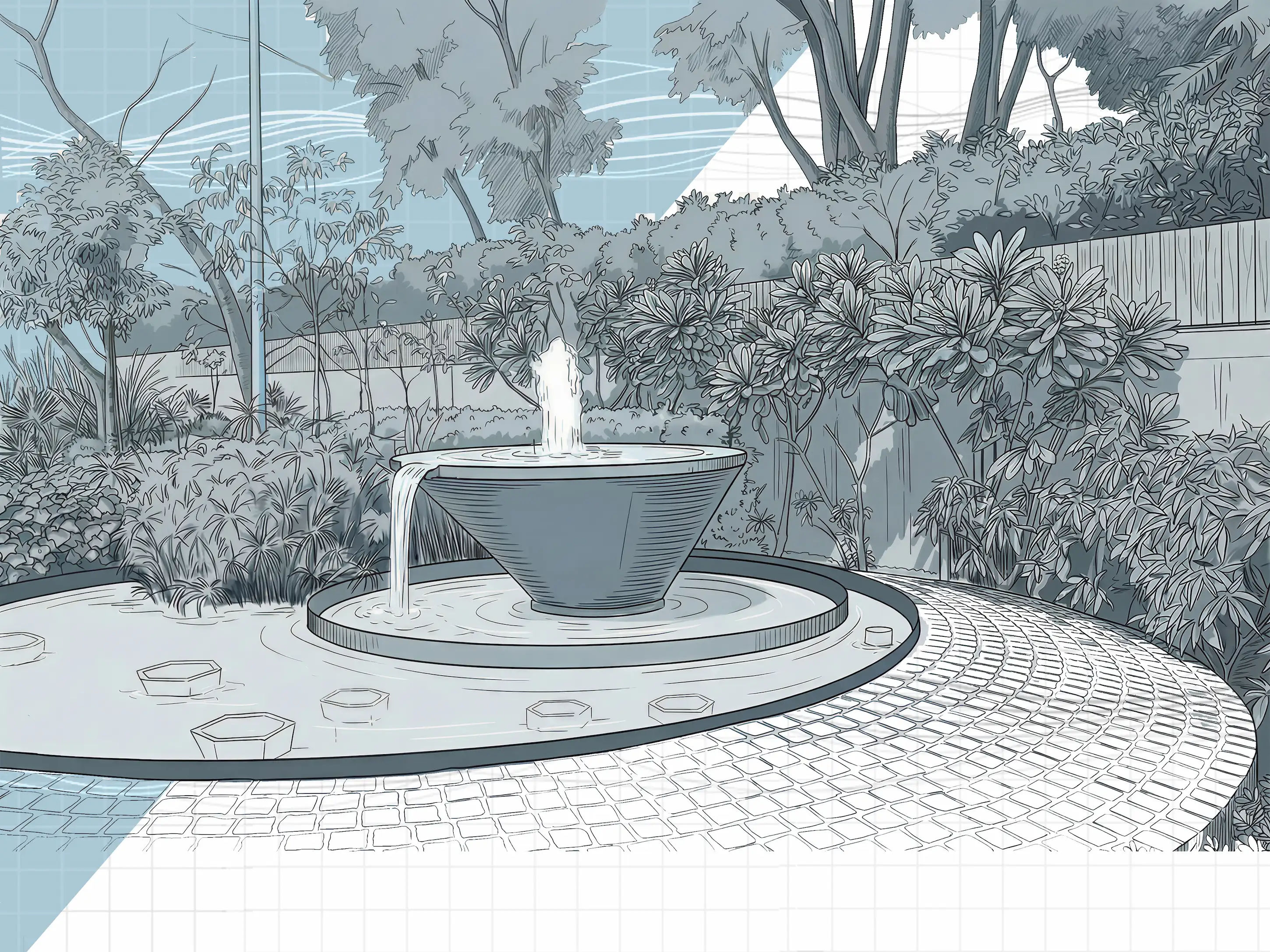
sharda house
ahmedabad,gujarat • 2019
shanti niwas
ahmedabad,gujarat • 2020
roseville
ahmedabad,gujarat • 2024
sandhan
sandhan
loading projects…