uttara
weekend house
concept
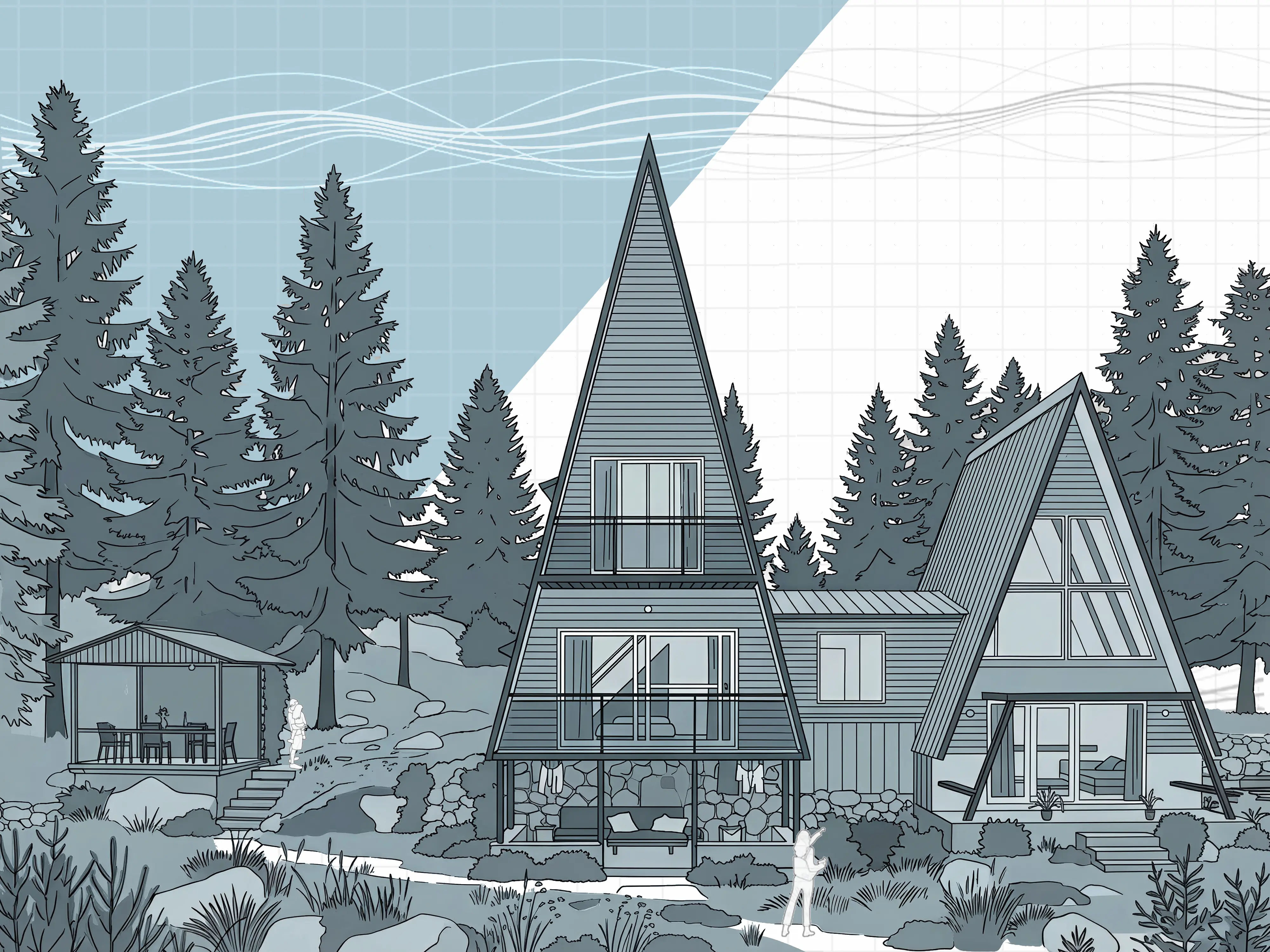
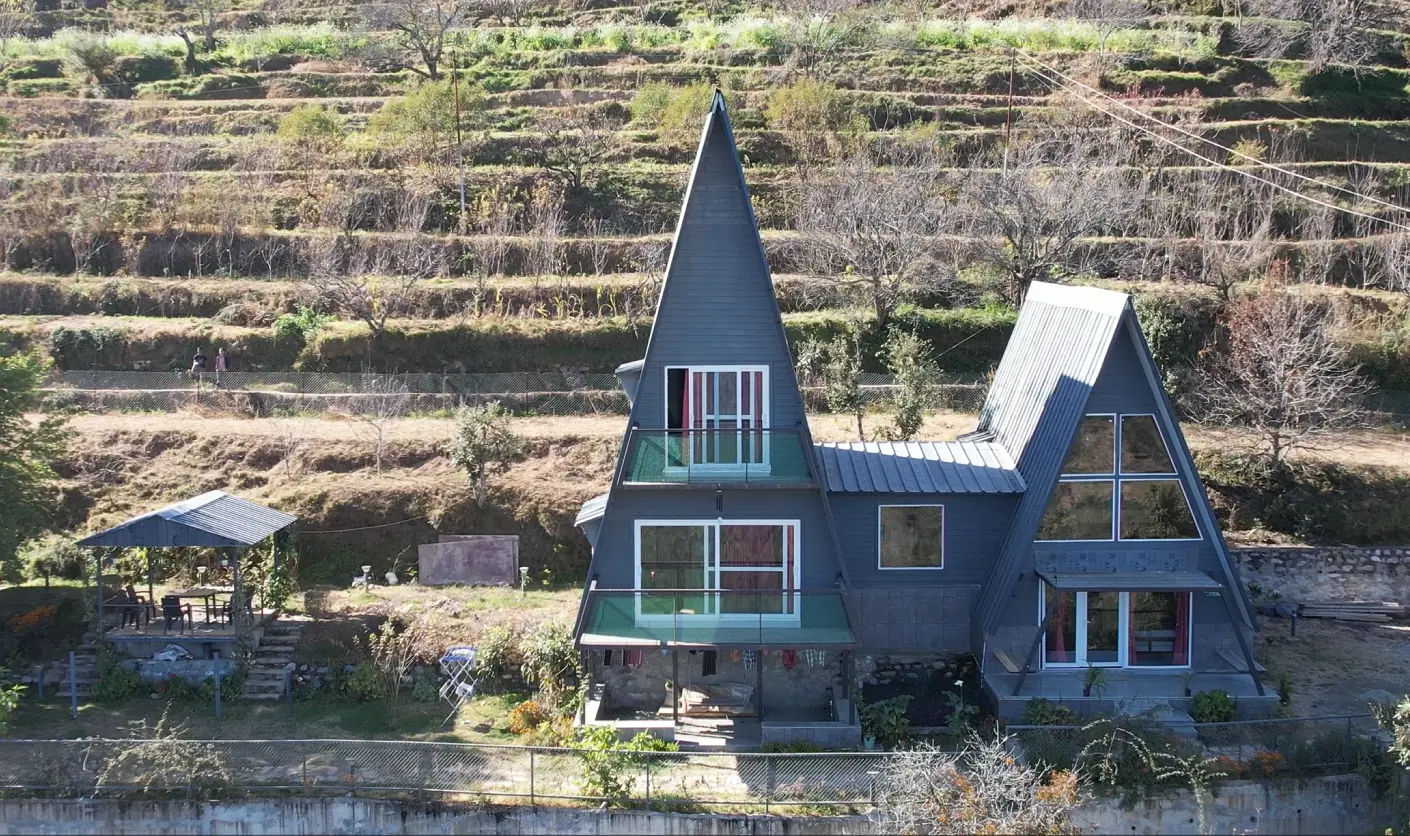
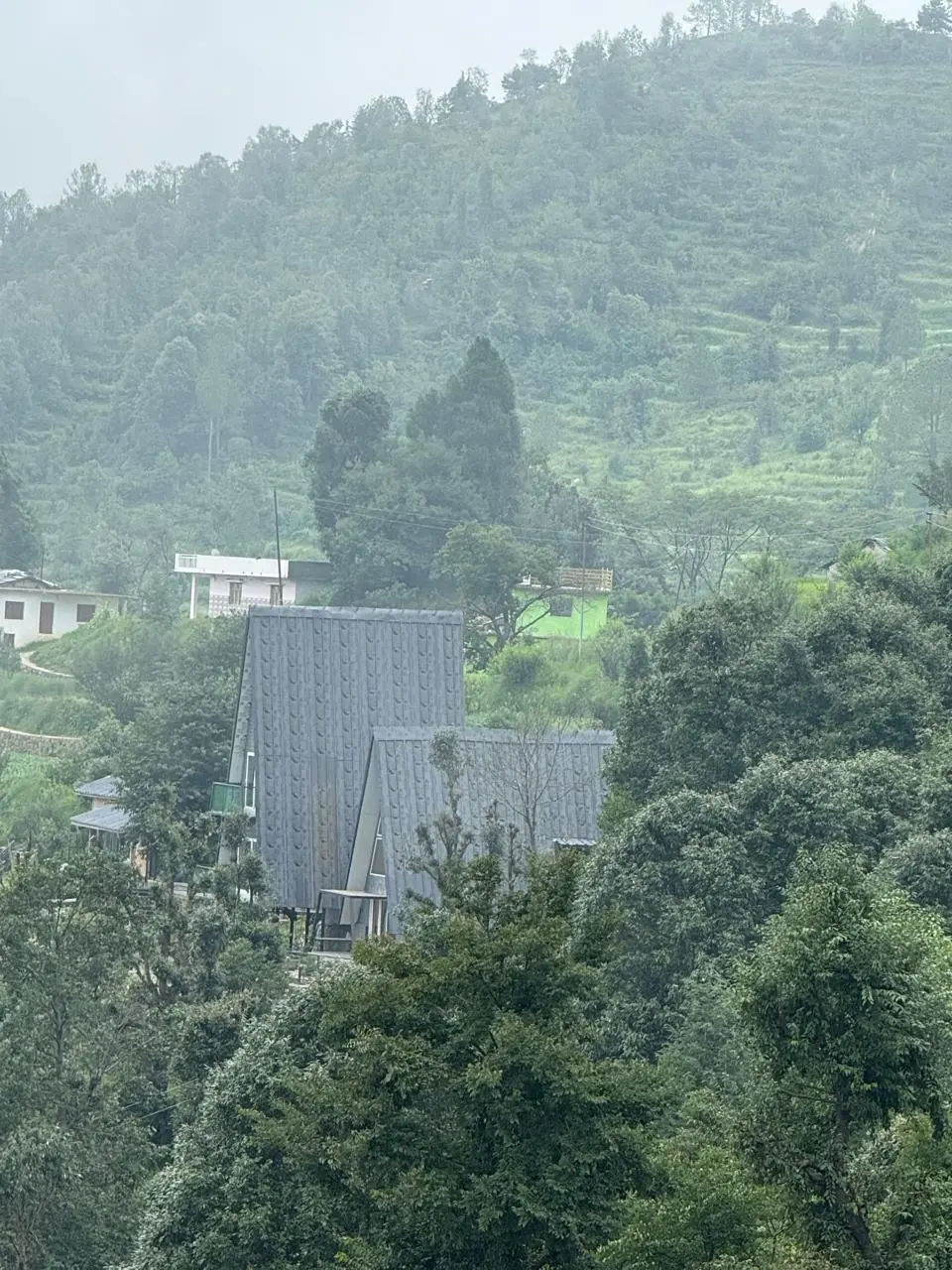
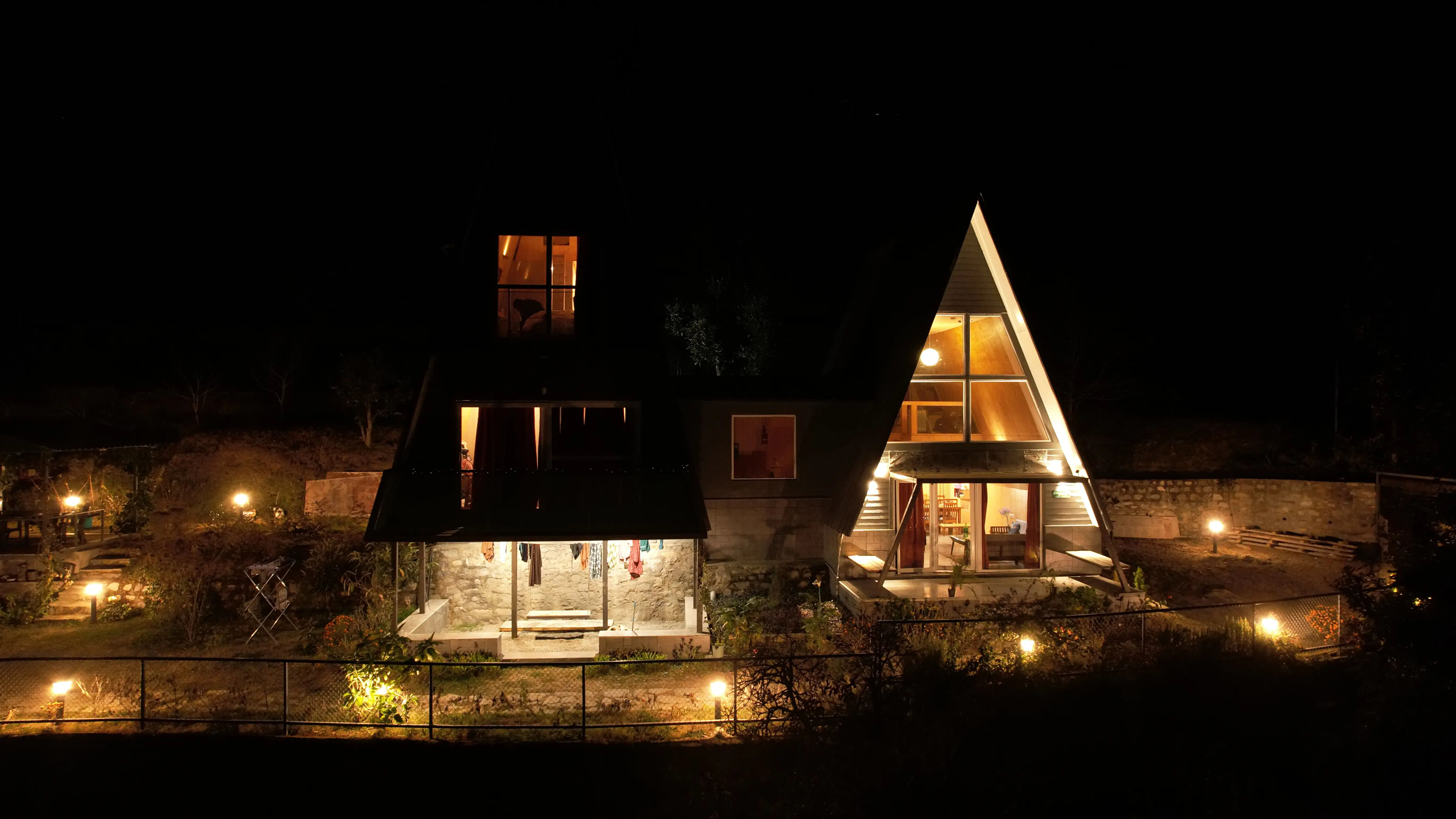
Set upon the descending Himalayan terrain, the project emerges as a careful response to contour rather than an imposition upon it. The built form is conceived as a series of fractured, vertically expressive volumes that step with the land, allowing the natural slope to dictate spatial hierarchy. Instead of consolidating into a singular mass, the structure breaks into A-frame silhouettes that echo the surrounding mountain ridgelines. The steep pitched roofs respond climatically to snow and rain, while visually extending the language of the distant peaks. The architecture does not flatten the site; it negotiates with it—retaining terraces, preserving trees, and allowing pathways to follow the natural grain of the earth. The house becomes an extension of the hillside, positioned in quiet equilibrium between built form and terrain.
design
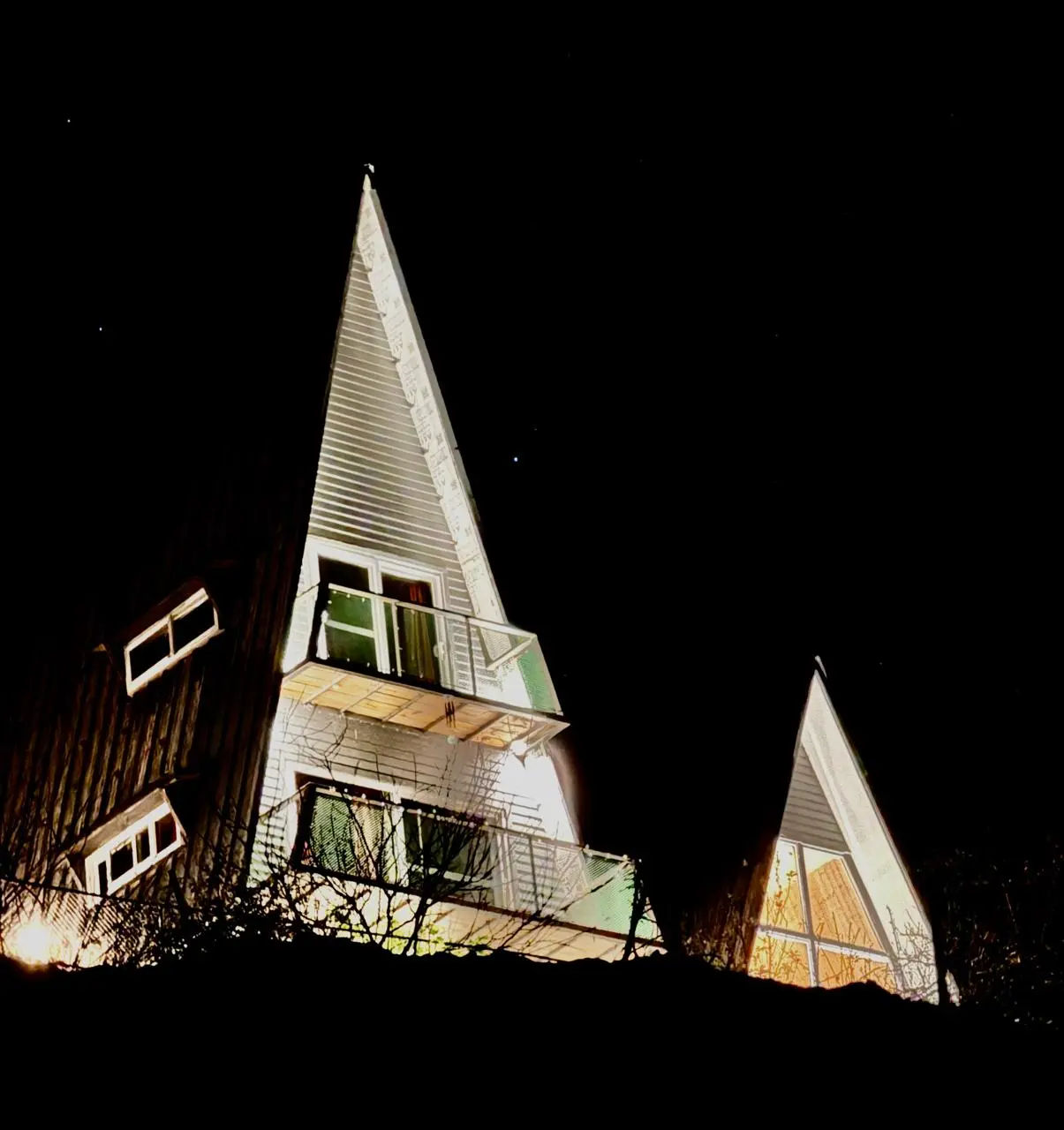
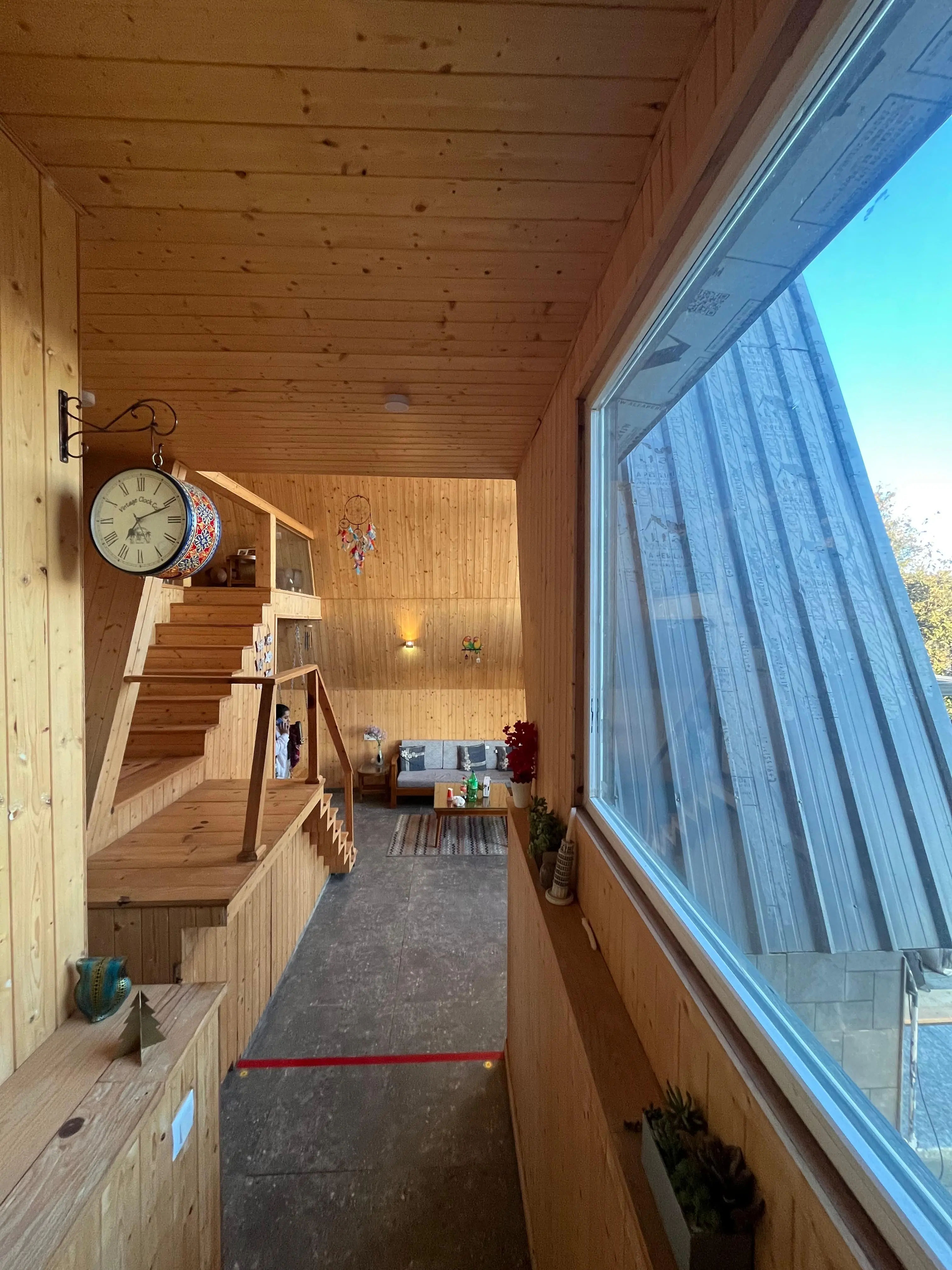
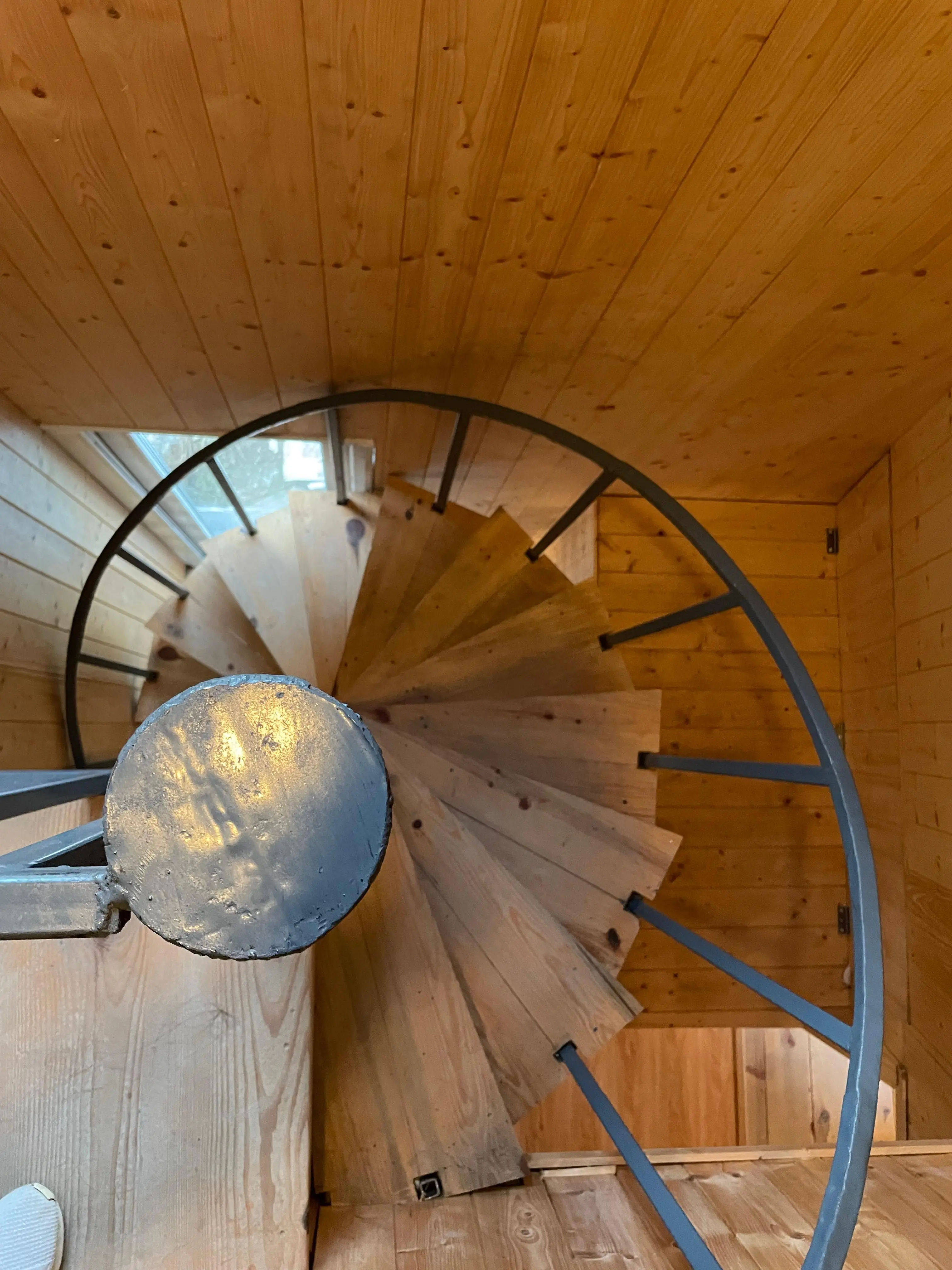
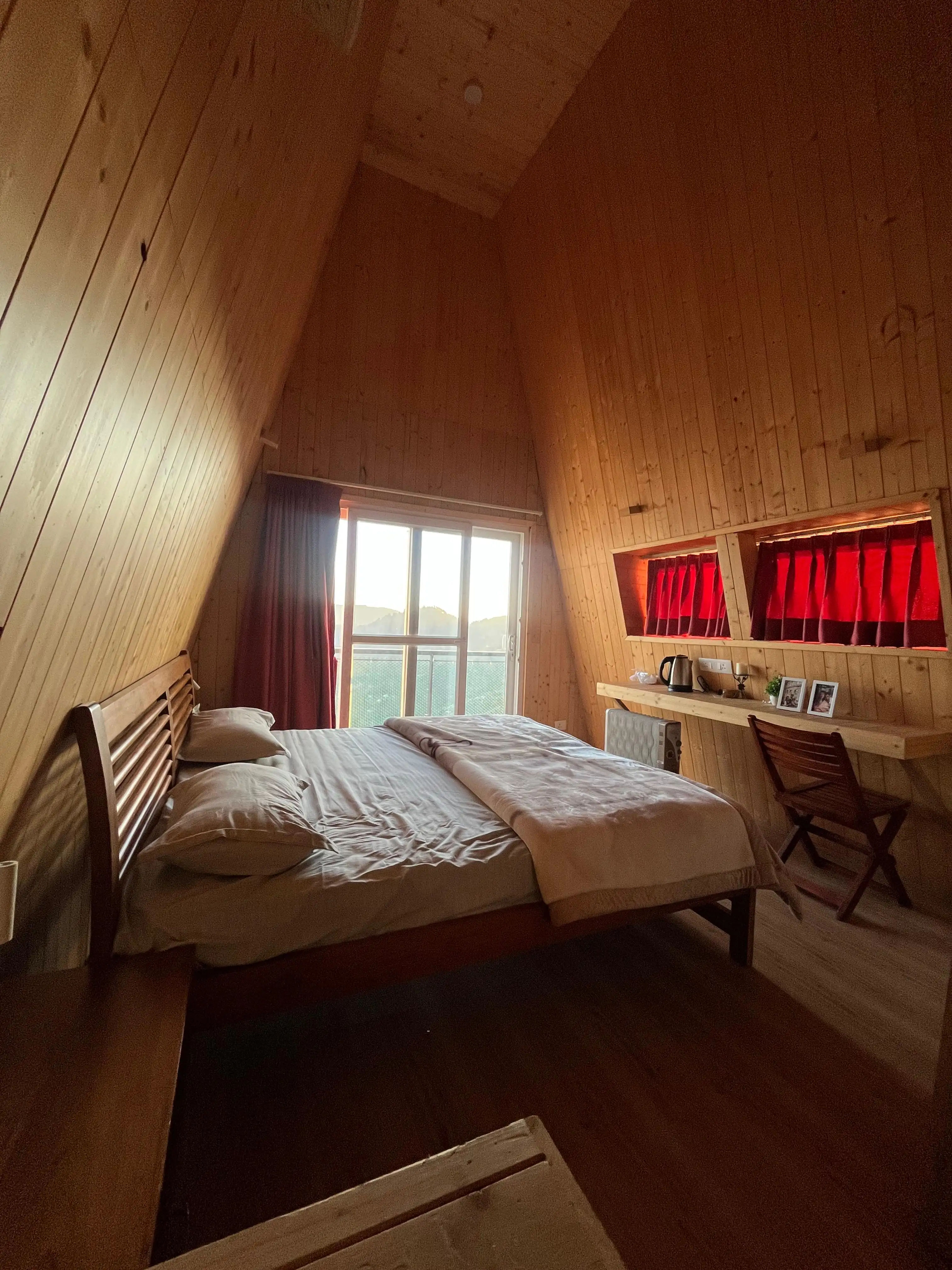
The sectional strategy reveals floors descending in sync with the mountain slope, each plinth carefully aligned to the natural gradient. The metal-framed structural base anchors the building securely into the terrain, while stone retaining edges stabilize the stepped formation. Above this robust frame, warm timber interiors define the inhabitable envelope. The interior image reflects this material continuity—angled wooden walls and ceilings follow the A-frame geometry, creating a unified spatial shell where structure and finish merge seamlessly. Built-in wooden furniture, loft platforms, and vertical ladder access reinforce the compact yet volumetrically rich organization. Large glazed openings and balconies project outward toward the valley, framing expansive views while maintaining a light footprint on the land. At night, as seen in the illuminated silhouette, the sharply rising roofs stand against the dark Himalayan sky, expressing both shelter and vertical aspiration. The project ultimately balances tectonic clarity with environmental sensitivity—metal structure for strength, timber for warmth, and form derived directly from slope and climate.
Click to view
Click to view
Click to view
Click to view
Click to view
Click to view
Click to view
project details
location
dhanachuli,uttarakhand
typology
residential
status
Completed
additional disciplines
Architecture • Landscape
client
Mr.hitesh vyas
year
2024
area
40,000 sq.ft.
keywords
SteppedMetal Frame StructureA-Frame VolumesTimberRidge-Echoing Silhouette
project team
similar projects
maheshwari residence
Indore,madhya pradesh • 2025
PT house
ahmedabad,gujarat • 2019
the parallel house
ahmedabad,gujarat • 2021
ub heritage corporate
ahmedabad,gujarat • 2024
sharda house
ahmedabad,gujarat • 2019
shanti niwas
ahmedabad,gujarat • 2020
roseville
ahmedabad,gujarat • 2024
ratnaakar oasis
ahmedabad,gujarat • 2023
sandhan
sandhan
loading projects…