shanti niwas
farmhouse
concept
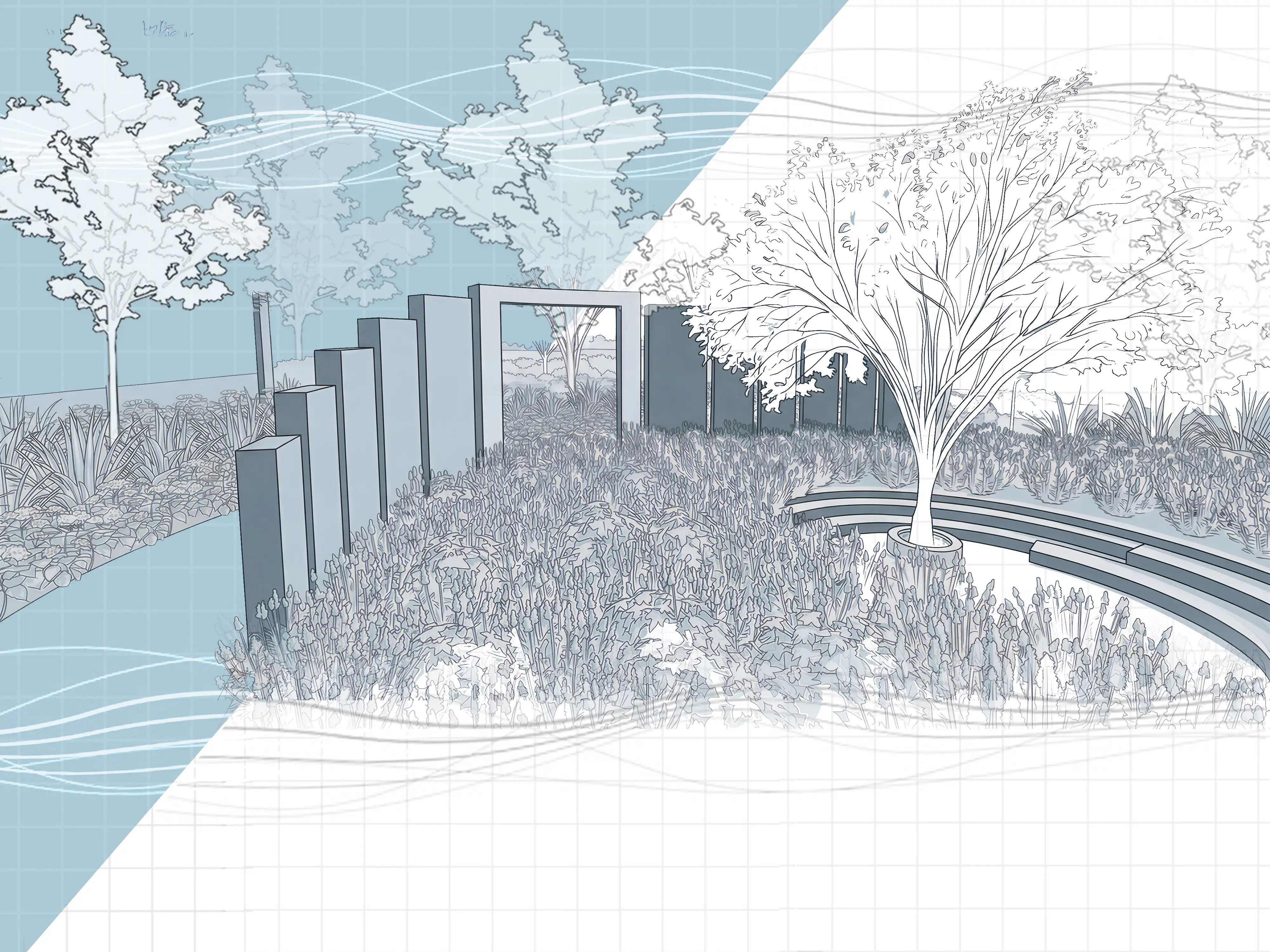
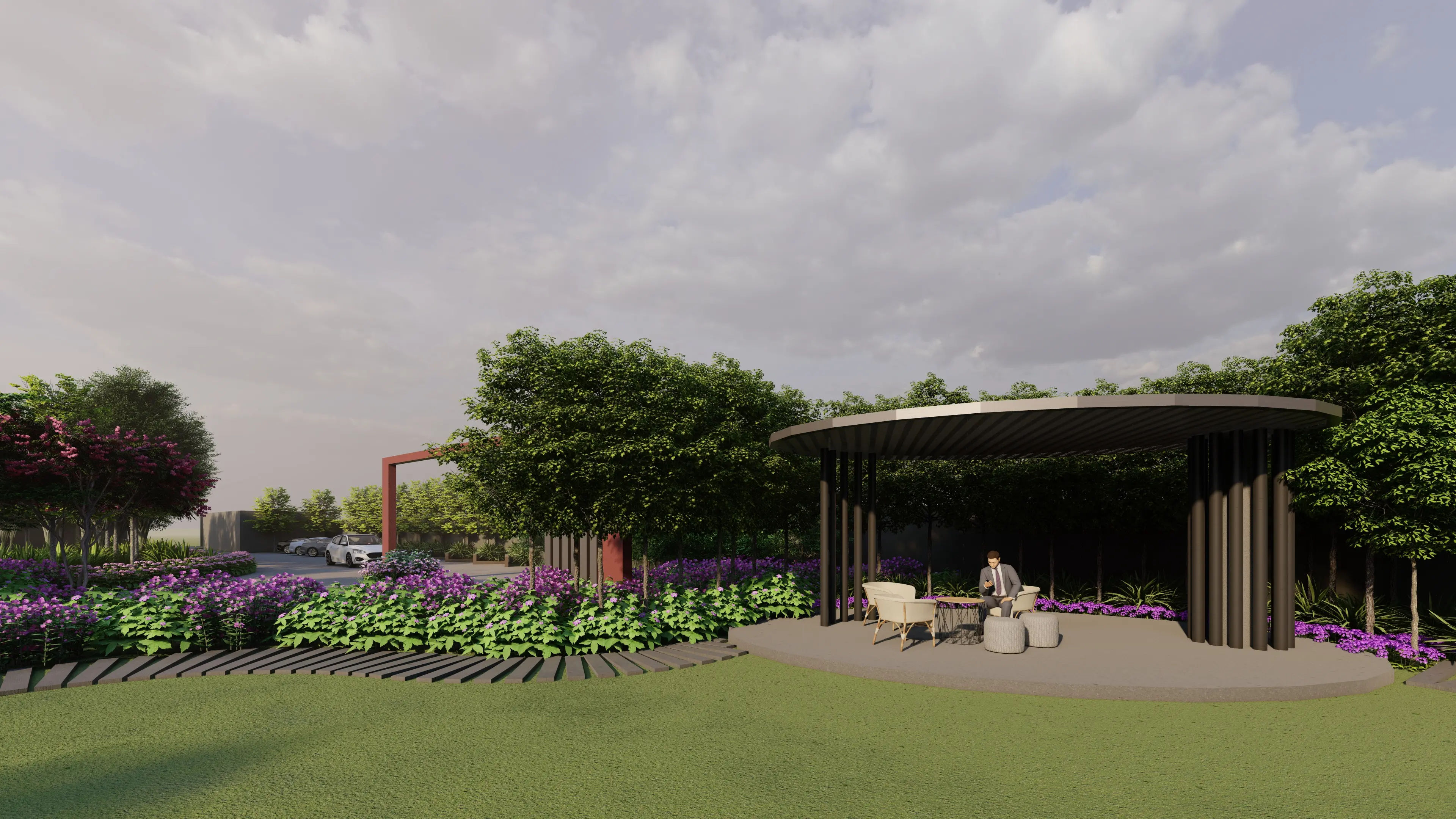
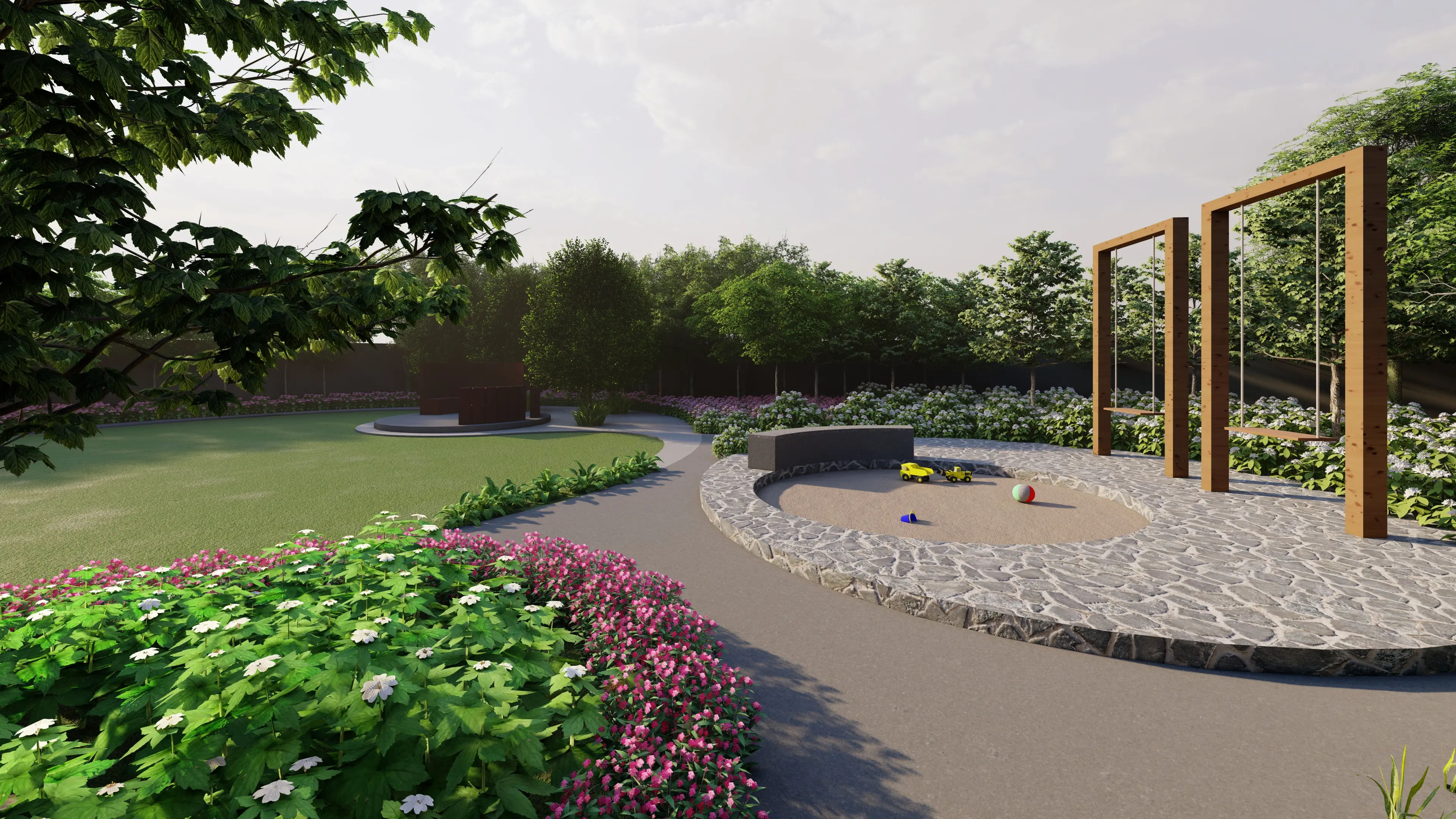
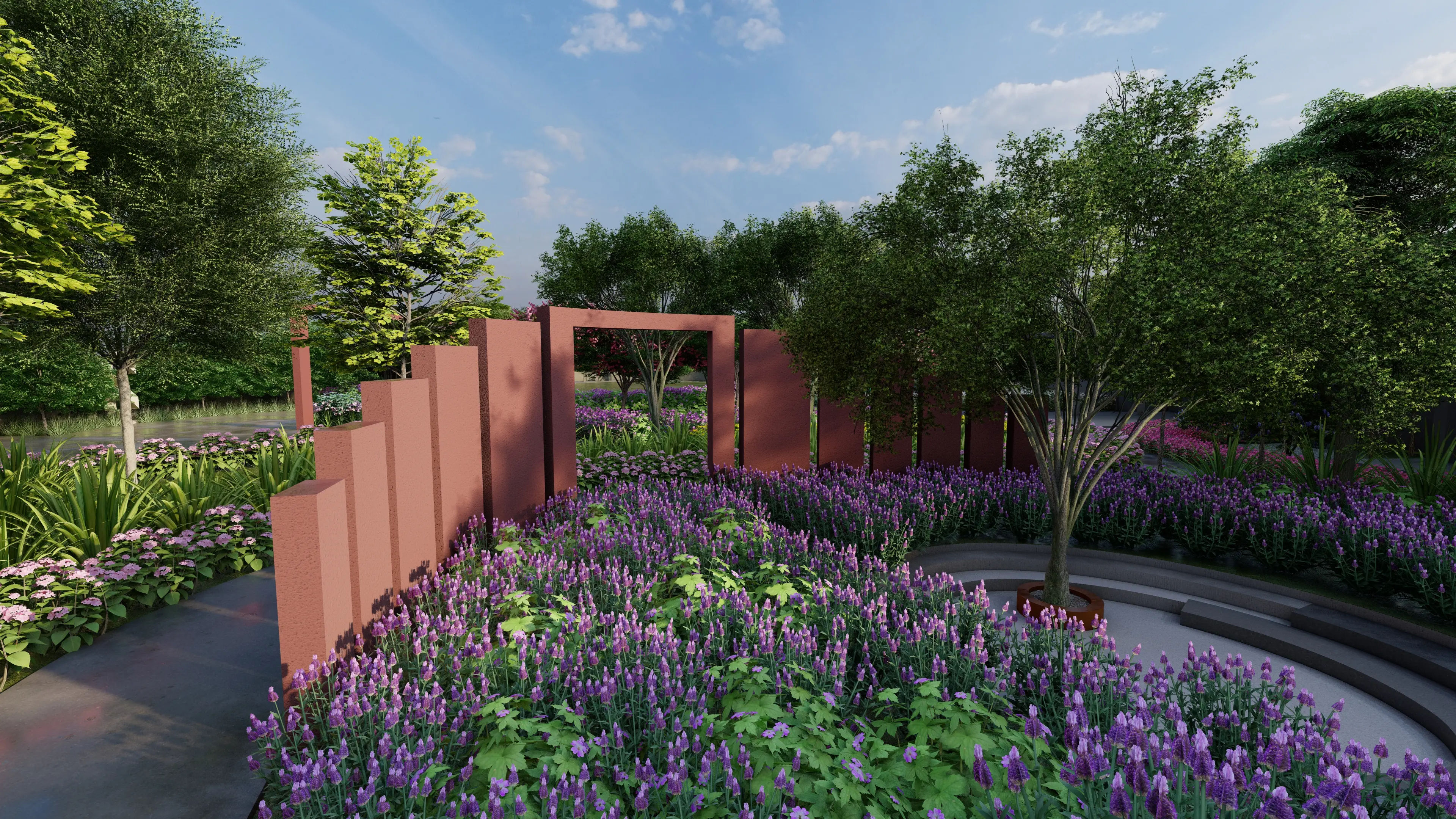
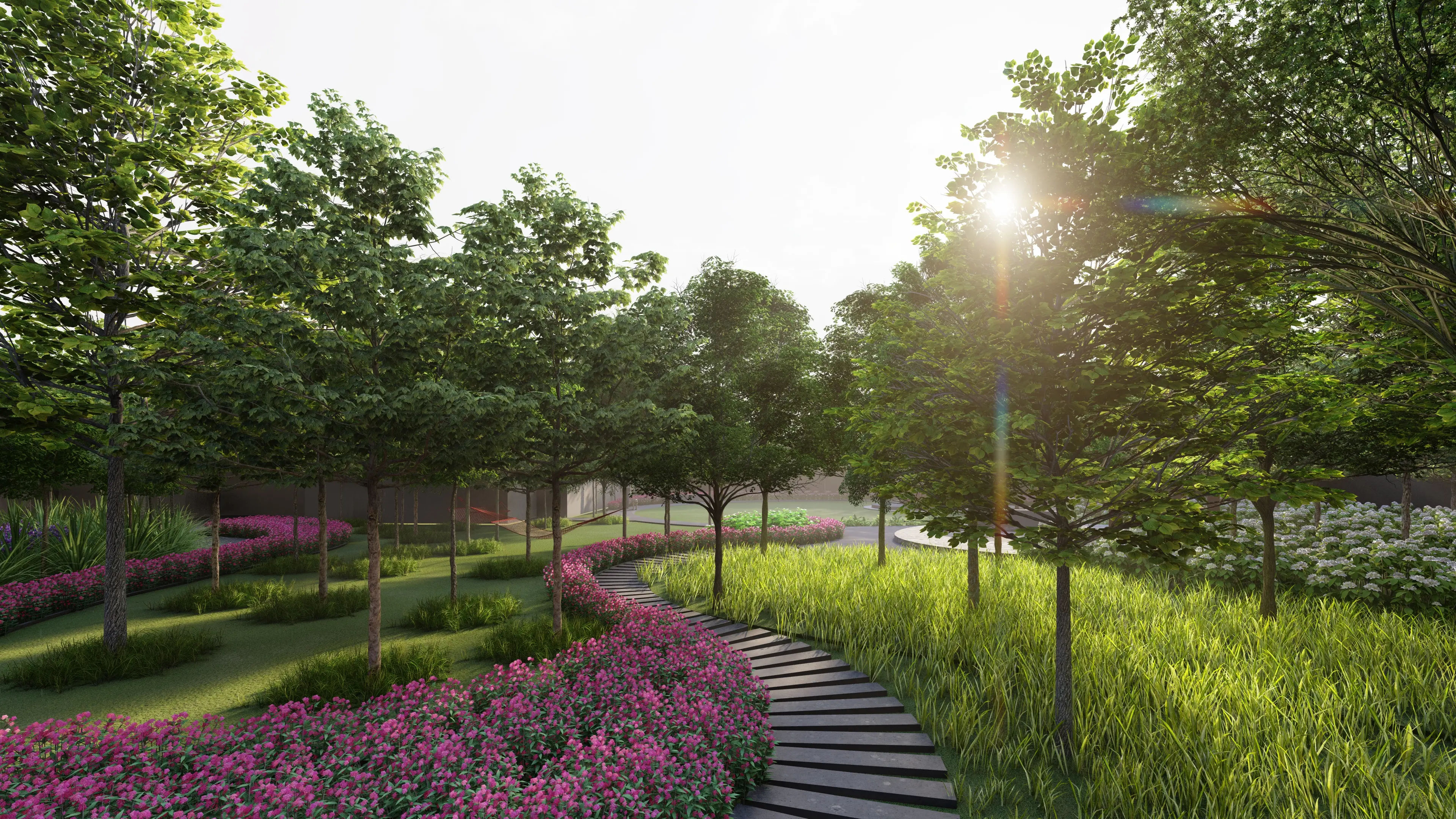
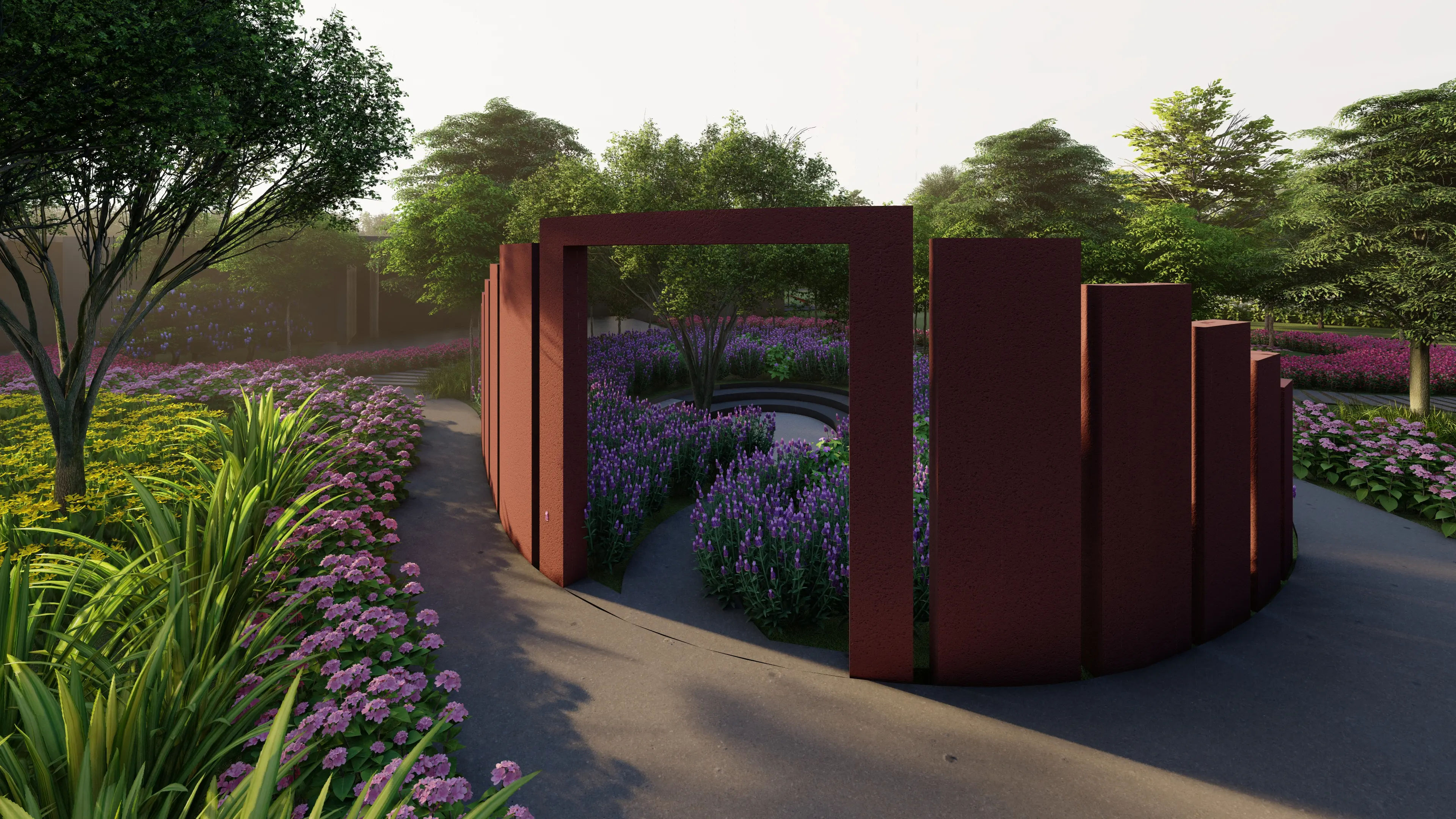
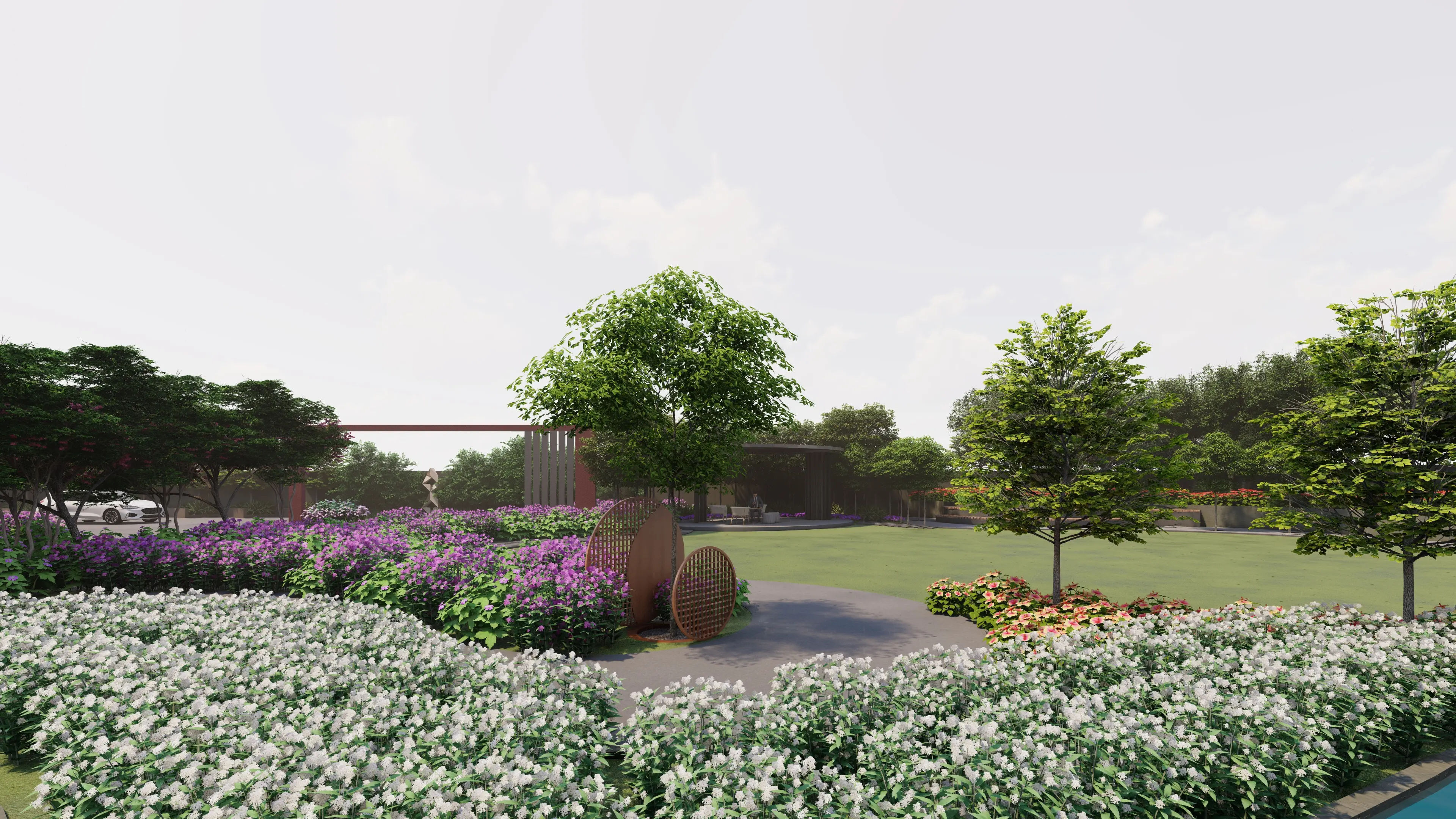
The farmhouse is envisioned as a lived landscape rather than a singular built object—an environment where arrival, cultivation, leisure, and retreat are choreographed through open ground. The journey begins at a roundabout marked by a bold frame element, a threshold through which vehicles pass, establishing a ceremonial yet understated entry. From here, the land unfolds in layers: orchards heavy with seasonal fruit, a working vegetable garden, and a forested trail that gradually withdraws from the openness of the lawns. Movement becomes experiential; as one follows the shaded trail, it dips into a sunken seating court before revealing a quiet private lawn beyond. The house sits almost centrally, acting as a pivot between two distinct realms—one expansive and celebratory, the other intimate and personal—allowing the landscape to define the spirit of the retreat.
design
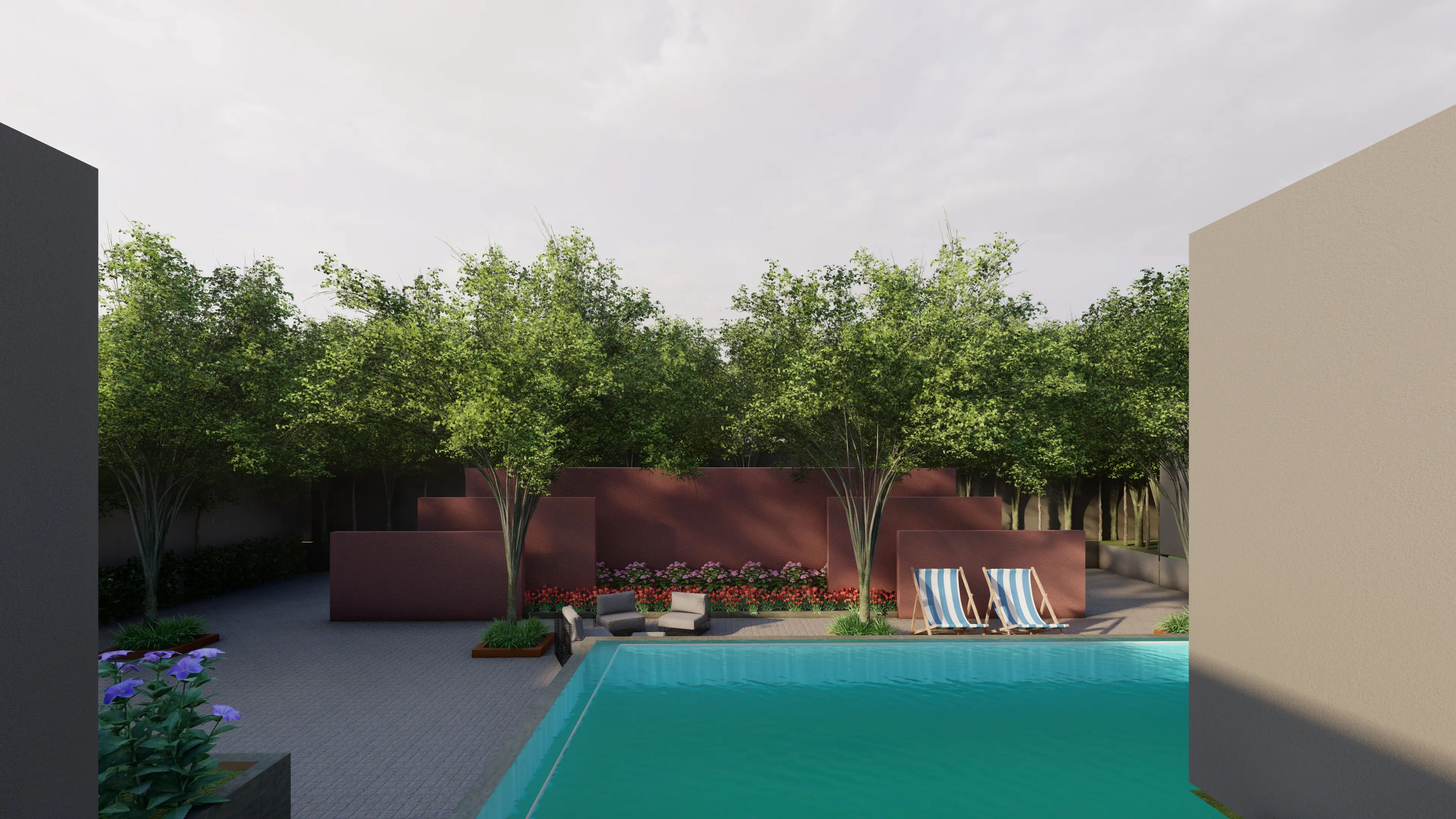
The planning strategy positions the main entry at the centre of the built mass, dividing the site into two clear yet connected domains. To one side lies the large party lawn, edged with abundant flowering shrubs and anchored by a shaded seating deck that extends hospitality into the outdoors. On the other, a smaller private lawn incorporates a children’s play area with swings and flows toward the sunken seating court discovered through the forest trail. The orchard and vegetable garden are not ornamental insertions but productive landscapes integrated into daily life. Native trees and farmhouse-style planting form a dense, low-maintenance palette, with generous drifts of flowering shrubs softening pathways and edges. The composition balances openness with enclosure, ensuring the farmhouse remains rooted in its agrarian context while offering layered spatial experiences.
Click to view
Click to view
Click to view
Click to view
Click to view
Click to view
Click to view
project details
location
ahmedabad,gujarat
typology
residential
status
Completed
additional disciplines
Landscape
client
Mr.Sarva Patel
year
2020
area
45556 sq.ft
keywords
Forest TrailCentral AxisFramed EntryOrchard GroveSunkenKitchen Garden
project team
similar projects
maheshwari residence
Indore,madhya pradesh • 2025
PT house
ahmedabad,gujarat • 2019
the parallel house
ahmedabad,gujarat • 2021
uttara
dhanachuli,uttarakhand • 2024
ub heritage corporate
ahmedabad,gujarat • 2024
sharda house
ahmedabad,gujarat • 2019
roseville
ahmedabad,gujarat • 2024
ratnaakar oasis
ahmedabad,gujarat • 2023
sandhan
sandhan
loading projects…