ultimate house
weekend house
concept
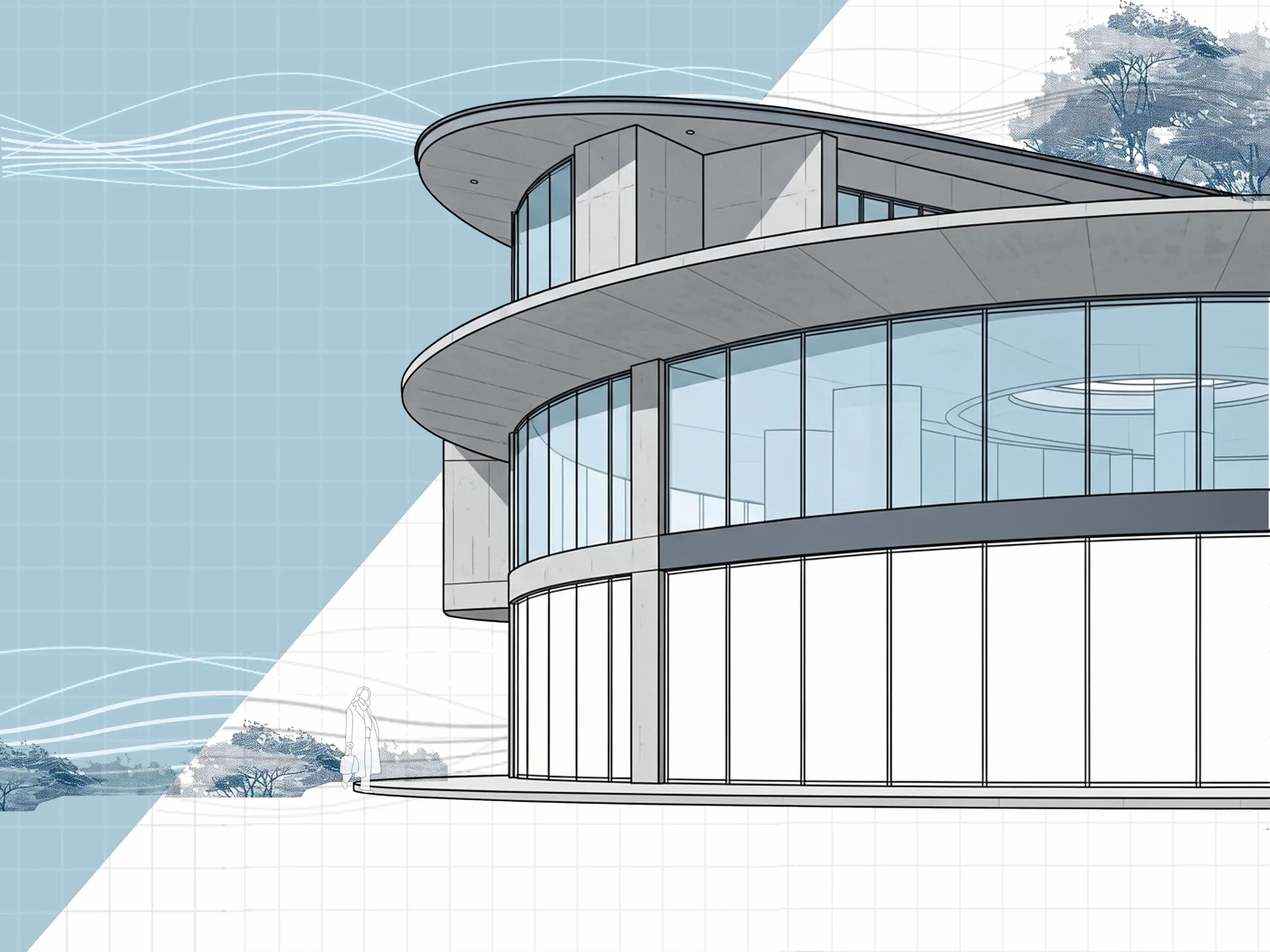
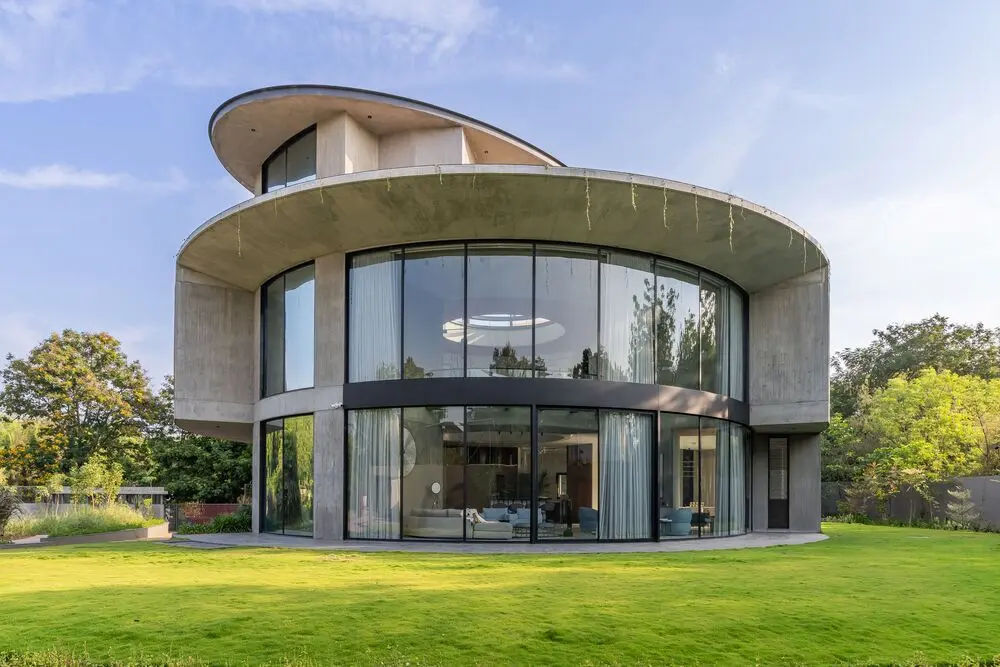
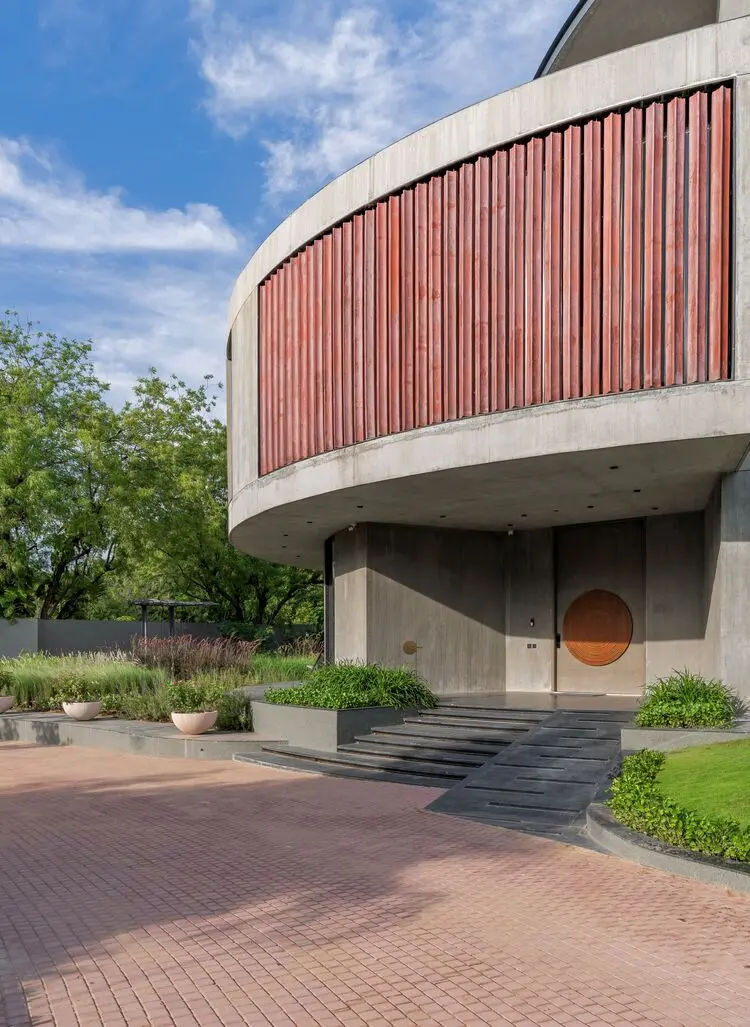
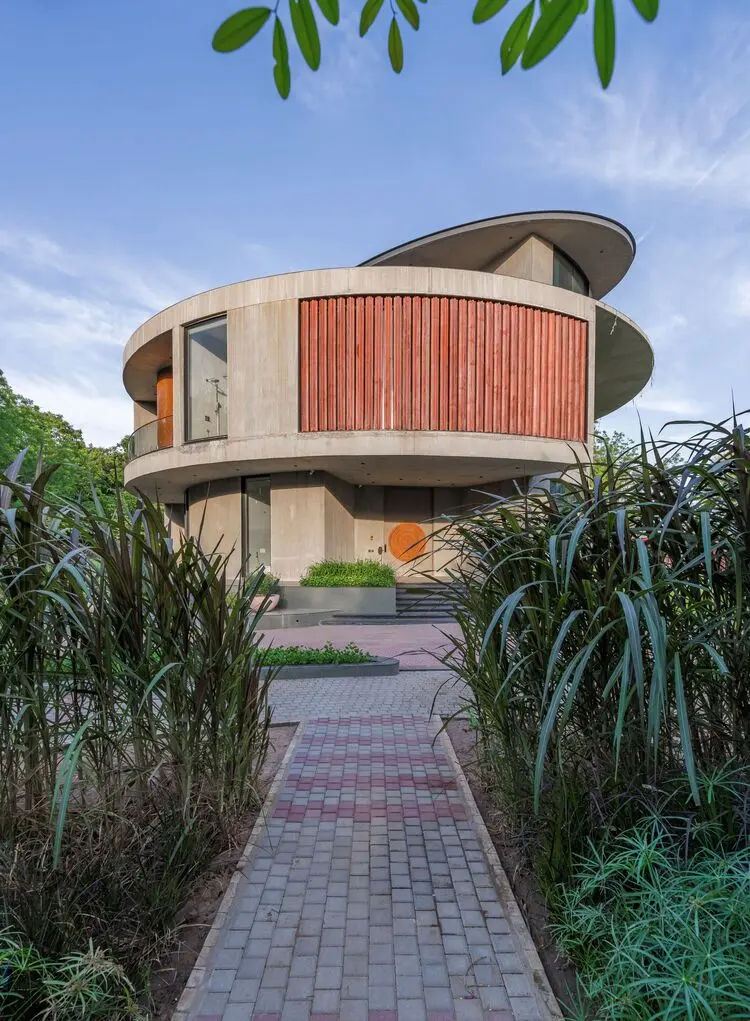
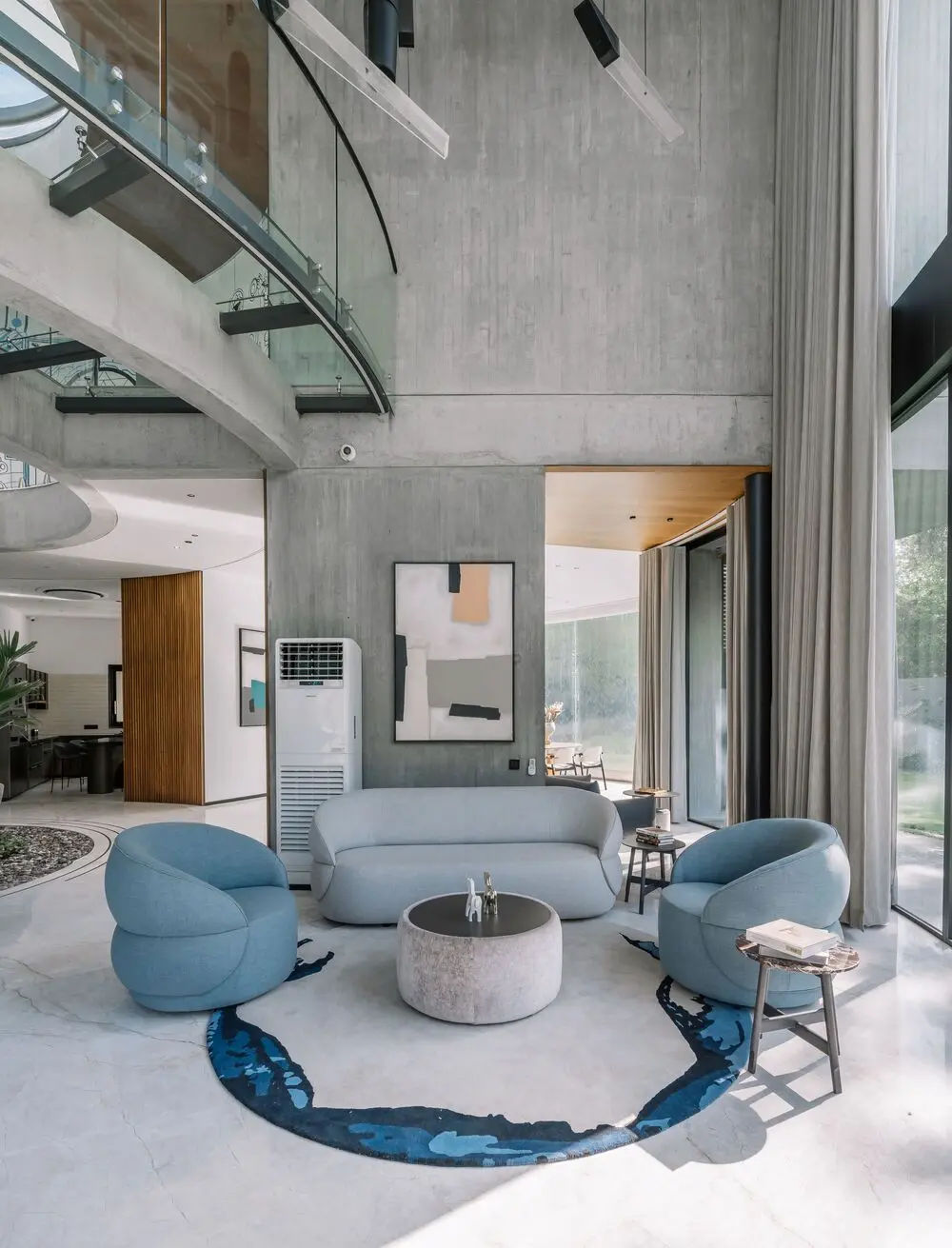
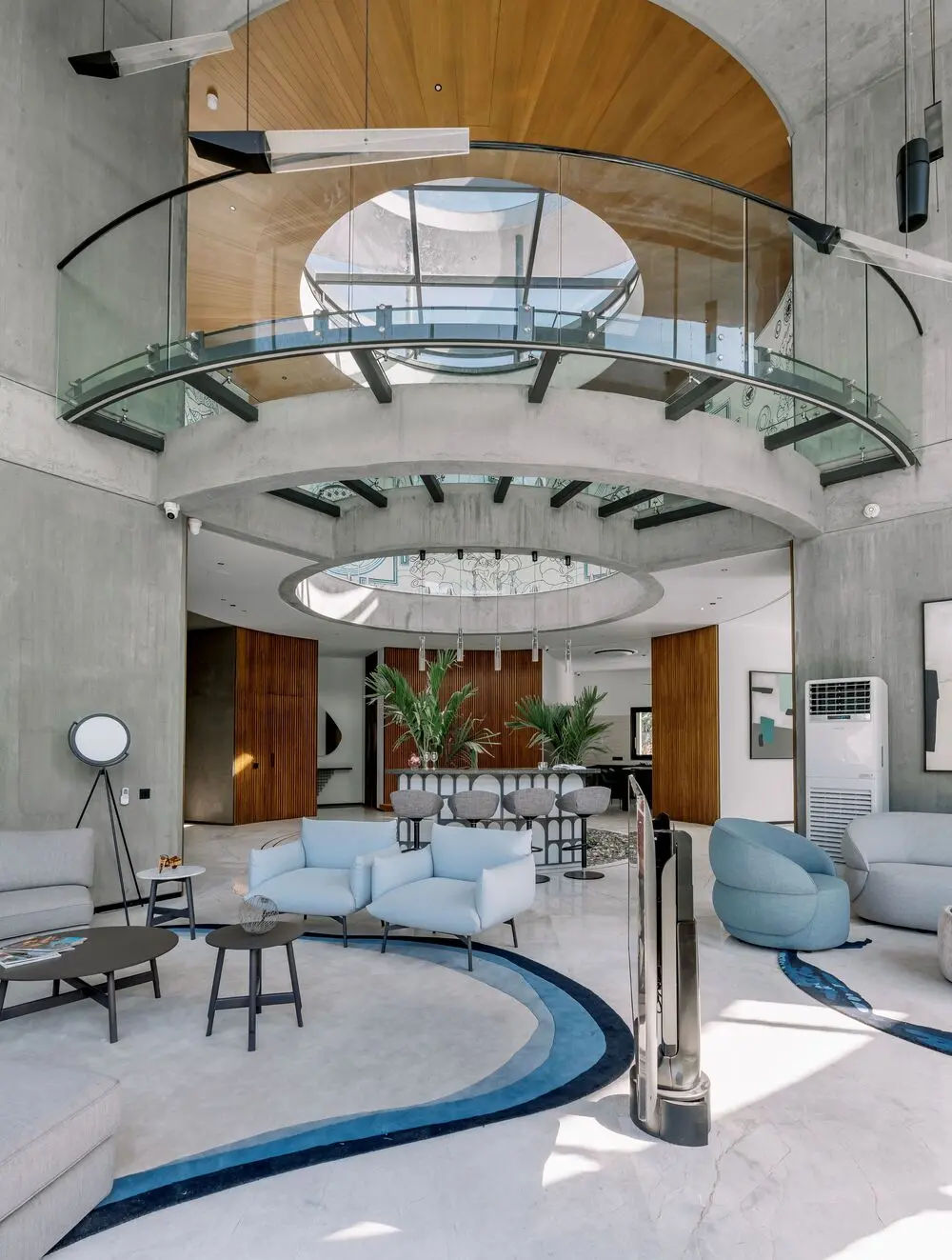
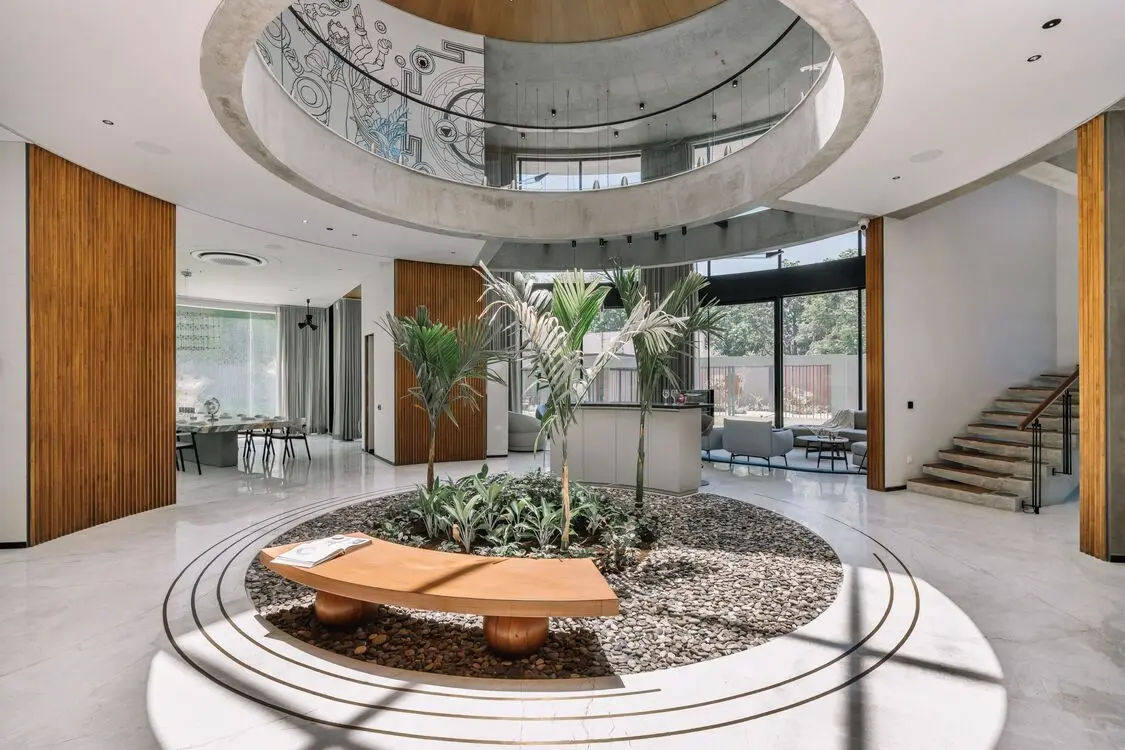
Inspired by the cosmos and Indian mythology, the residence reinterprets architecture beyond conventional linear geometry, envisioned as a private retreat. Set on a sloping site, the entrance is placed on higher ground to create an experiential approach reminiscent of a fort. The two-storey home offers multiple 180-degree views, landscape-facing balconies, ample cross-ventilation, and a seamless indoor–outdoor connection. Visitors enter through a double-height living space that flows into the dining and kitchen, organized around an open-to-sky central courtyard illuminated by a large circular skylight.
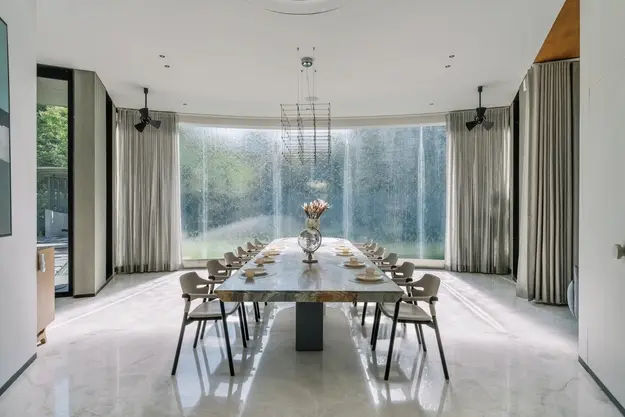
The kitchen includes an island counter and an arc-shaped raised seating along the courtyard for relaxed dining. The dining area faces a south-oriented waterfall, evoking a sense of calm. A floating serpentine staircase, as described by Janki Vyas, acts as a sculptural centerpiece with concrete, wood, brass detailing, and indirect lighting that accentuates its curves. The ground floor accommodates interconnected public spaces and a bedroom, while the upper level houses pie-shaped rooms with three bedrooms featuring circular beds and an entertainment room. A basement lounge for private gatherings is accessed via a spiral staircase.
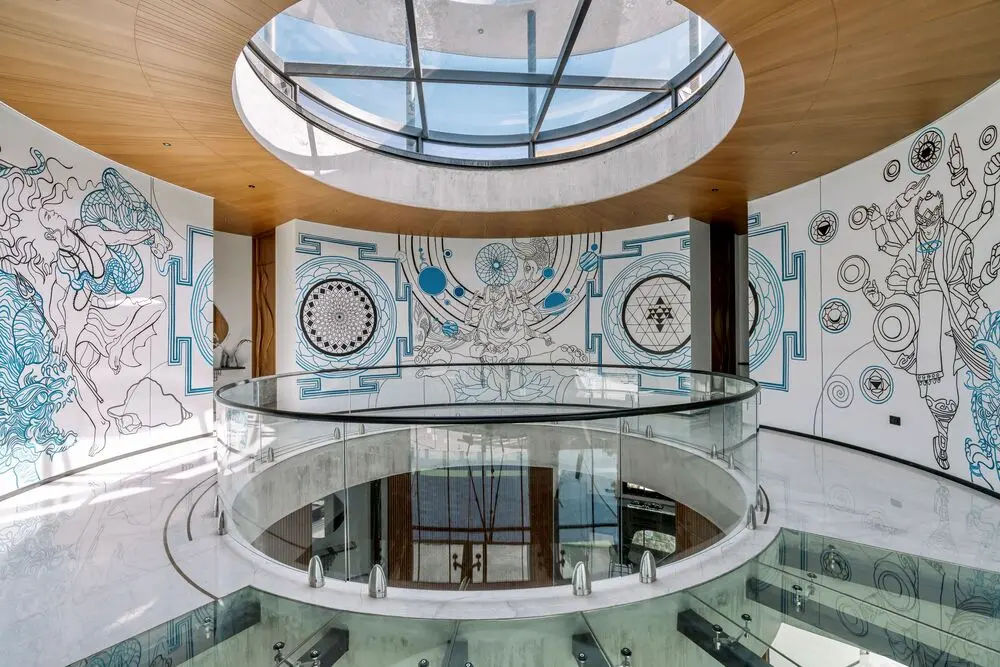
Flowing volumes and undulating open-to-sky ceilings create light-filled interiors that mirror the exterior form. The material palette of concrete, glass, wood, and stone is paired with curvilinear contemporary furniture in soothing tones, framing panoramic views outdoors. As noted by Sneha Suthar, the first-floor passage with partial marble and glass flooring offers a floating experience, complemented by a wall mural by artist Priyanka Thaker that reinterprets Indian mythology in modern linework.
design
The design encourages family interaction while maintaining warmth, comfort, and intimacy, fostering a strong connection to the outdoors. The home brings the family together while allowing individuality and personal experiences. Locally sourced materials were used wherever possible to reduce environmental impact. As the family enjoys hosting, a dedicated entertainment zone connects the lawn to an open gazebo and an enclosed lounge, accommodating large gatherings. Central trees provide natural shade, while a wrap-around walkway seamlessly integrates the landscape, architecture, and interiors. The strategic use of red guides movement along pathways rather than highlighting design elements.
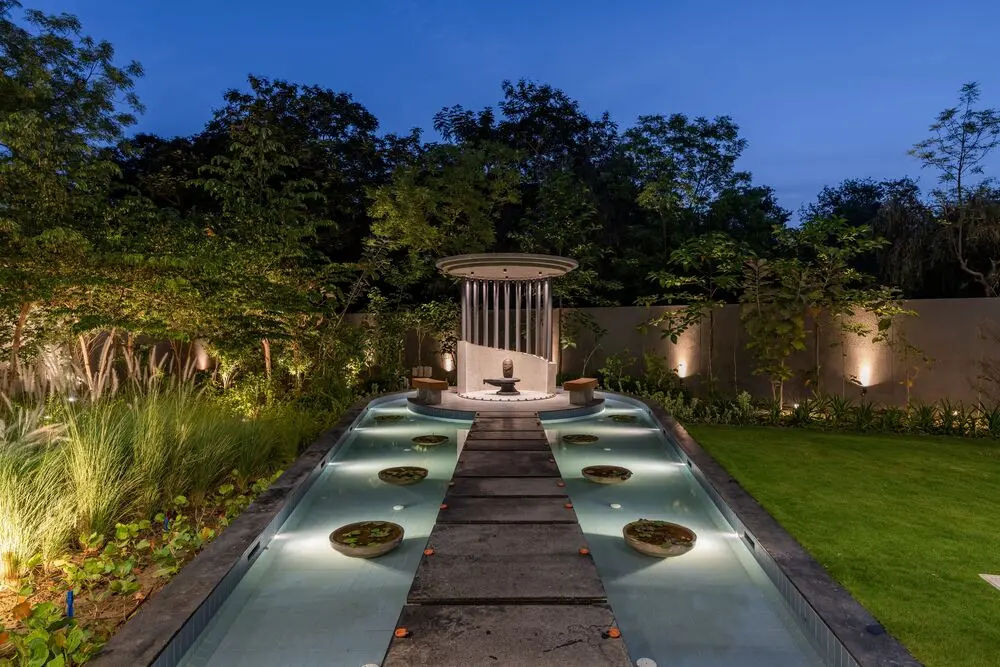
A secluded outdoor pooja space interprets the panch tatva through a lily pond waterway leading to an open shrine, where the Shiva-linga sits within a jungle backdrop and fire rituals are performed. The Round House explores a circular form with interconnected spaces, anchored by a central oculus symbolizing divine rays from the Brahmanda. The Shivalinga is placed in the northeast corner amid dense landscape, expressing the belief that divinity exists in nature. Designed around water and natural elements, the home is enveloped by a meditative landscape of native and ayurvedic plants, offering varied seating experiences. The landscape enhances the pure architectural form with organic curves that extend the spatial experience beyond the site.
Click to view
Click to view
Click to view
Click to view
Click to view
Click to view
Click to view
Click to view
Click to view
project details
location
ahmedabad,gujarat
typology
residential
status
Completed
additional disciplines
Architecture • Interior • Landscape
client
Mr. Janak Patel
year
2024
area
7,800 sq.ft.
keywords
circular housecosmologyIndian mythology180-degree viewCurvestemplewater curtainmeditative landscape
project team
similar projects
maheshwari residence
Indore,madhya pradesh • 2025
PT house
ahmedabad,gujarat • 2019
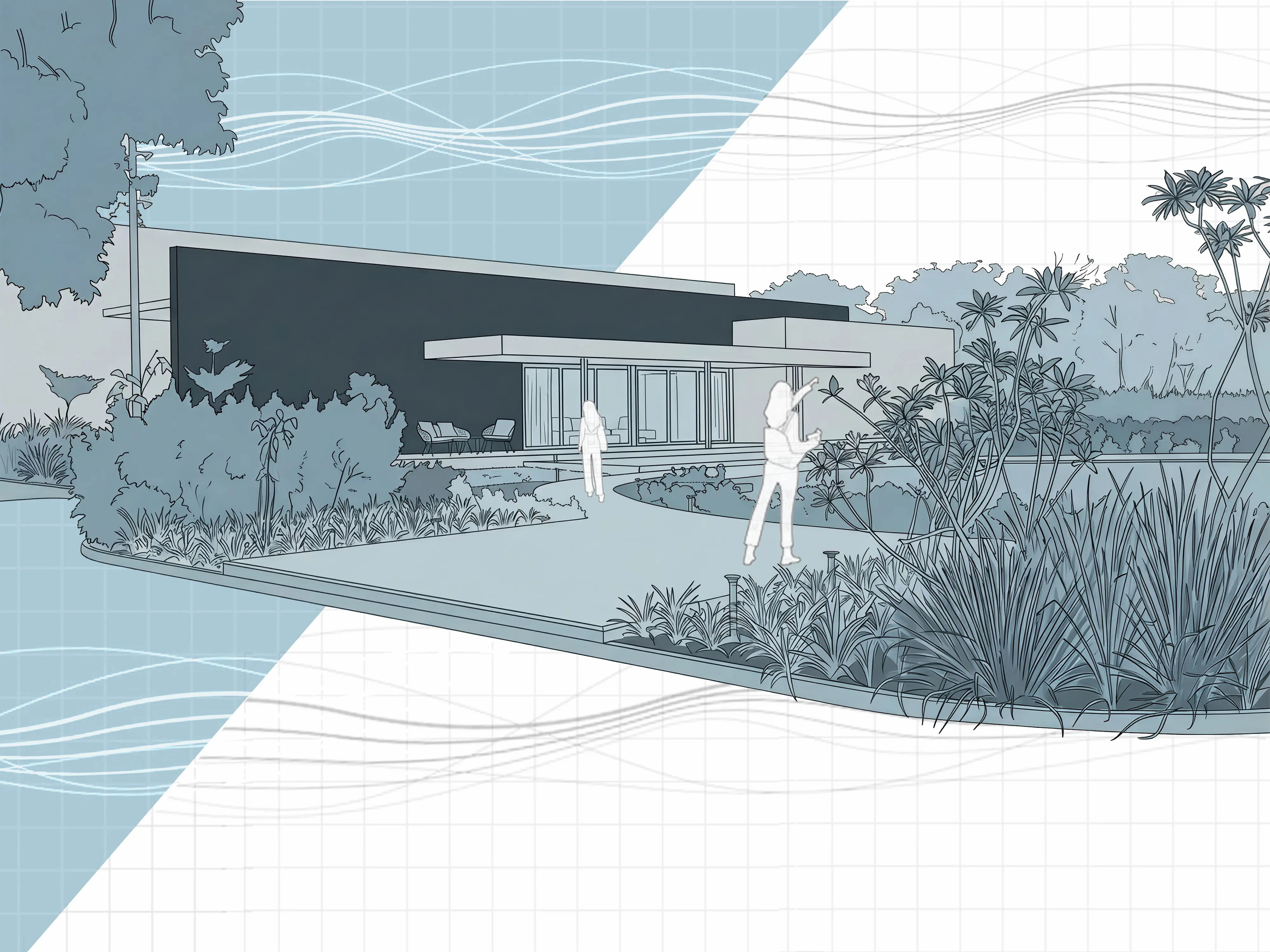
the parallel house
ahmedabad,gujarat • 2021
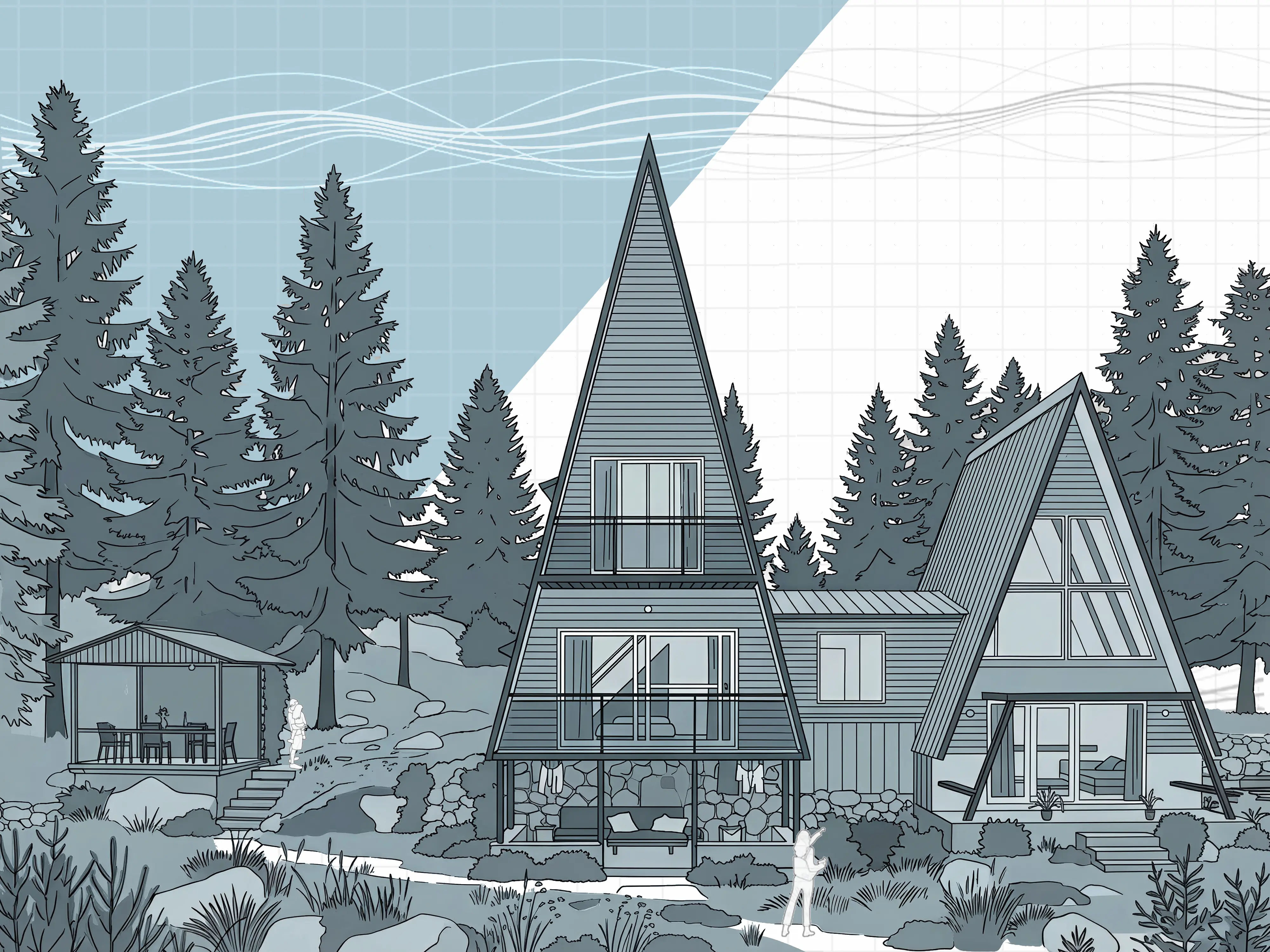
uttara
dhanachuli,uttarakhand • 2024
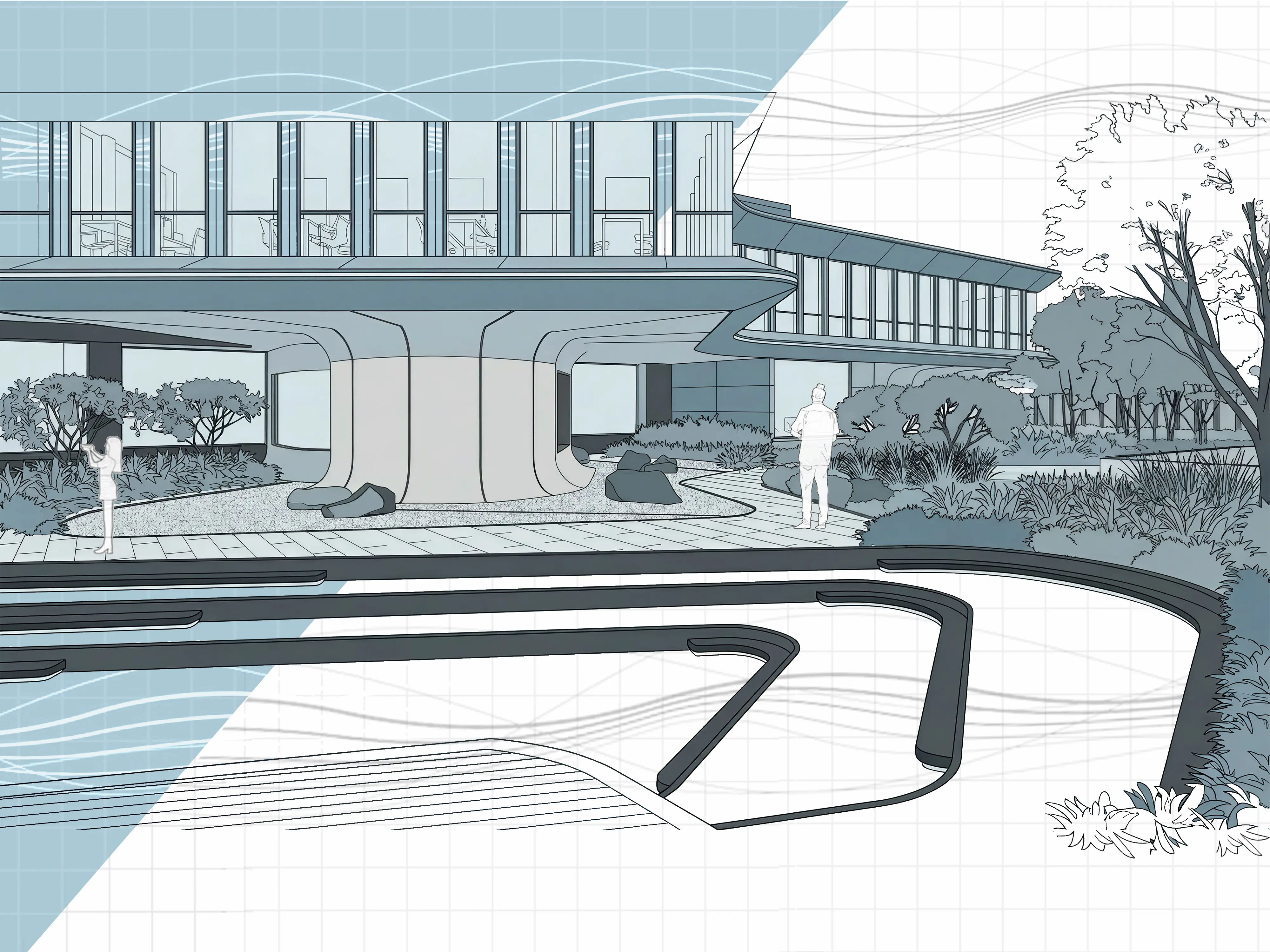
ub heritage corporate
ahmedabad,gujarat • 2024
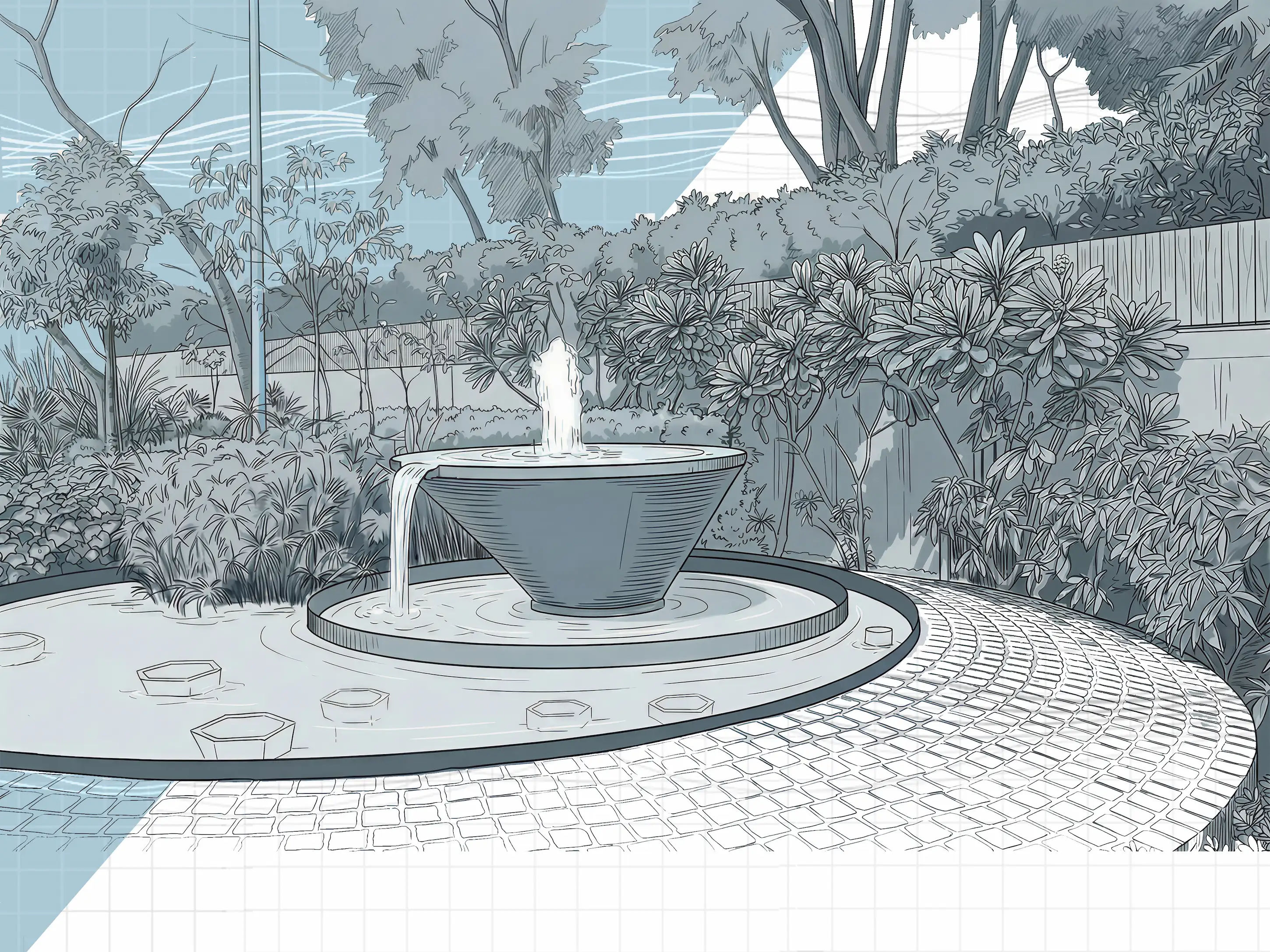
sharda house
ahmedabad,gujarat • 2019
shanti niwas
ahmedabad,gujarat • 2020
roseville
ahmedabad,gujarat • 2024
sandhan
sandhan
loading projects…