education hub
institutional
concept
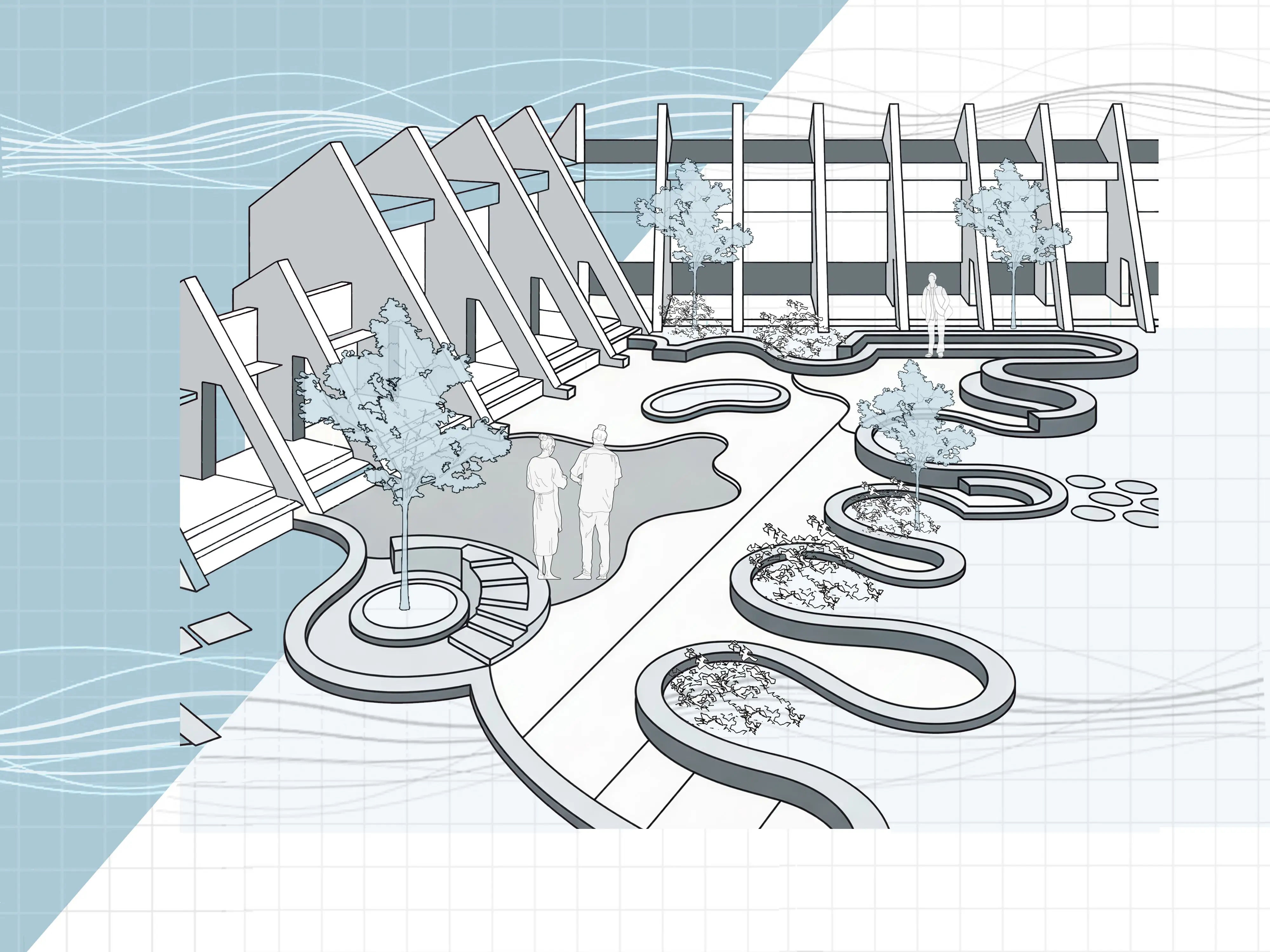
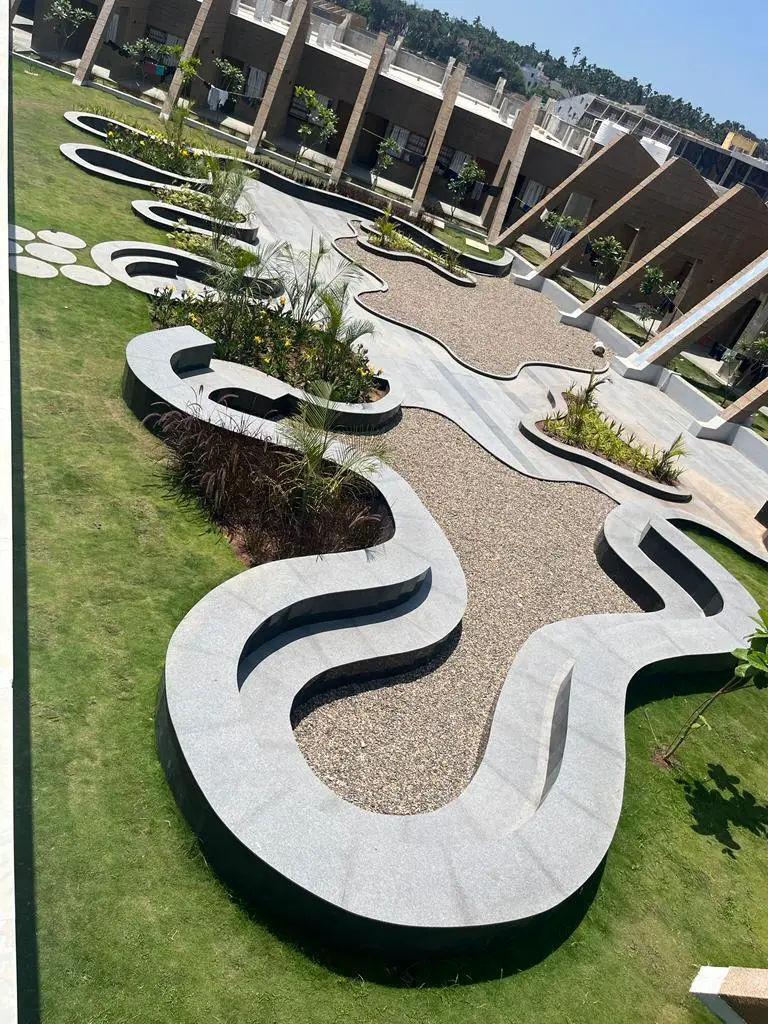
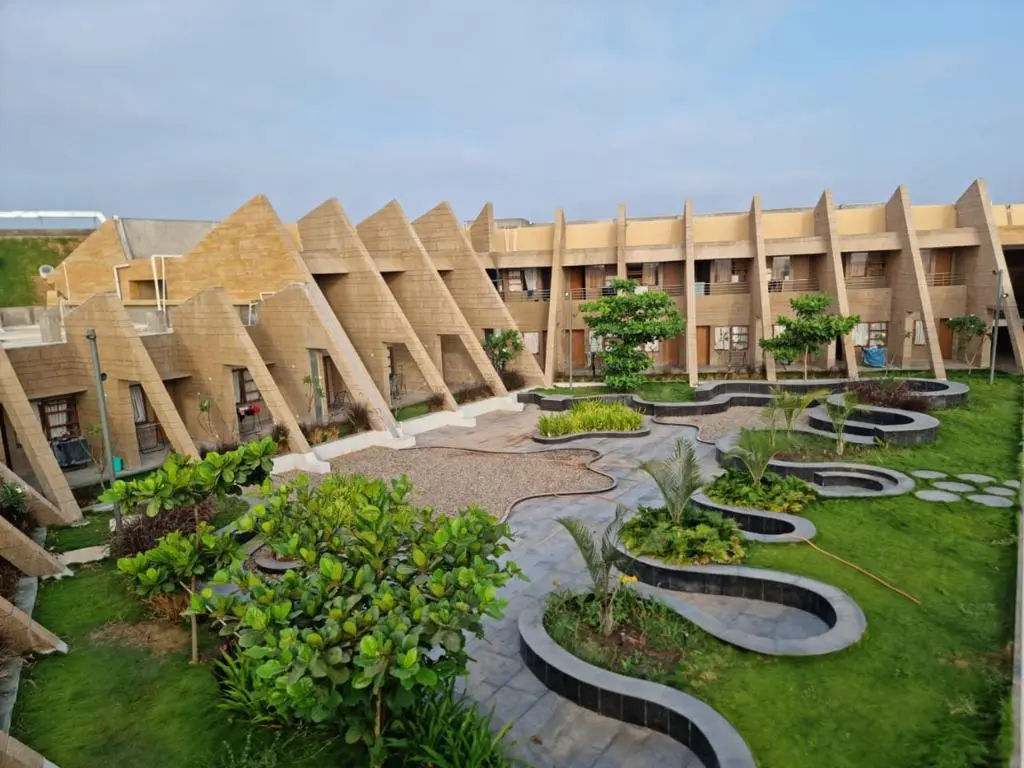
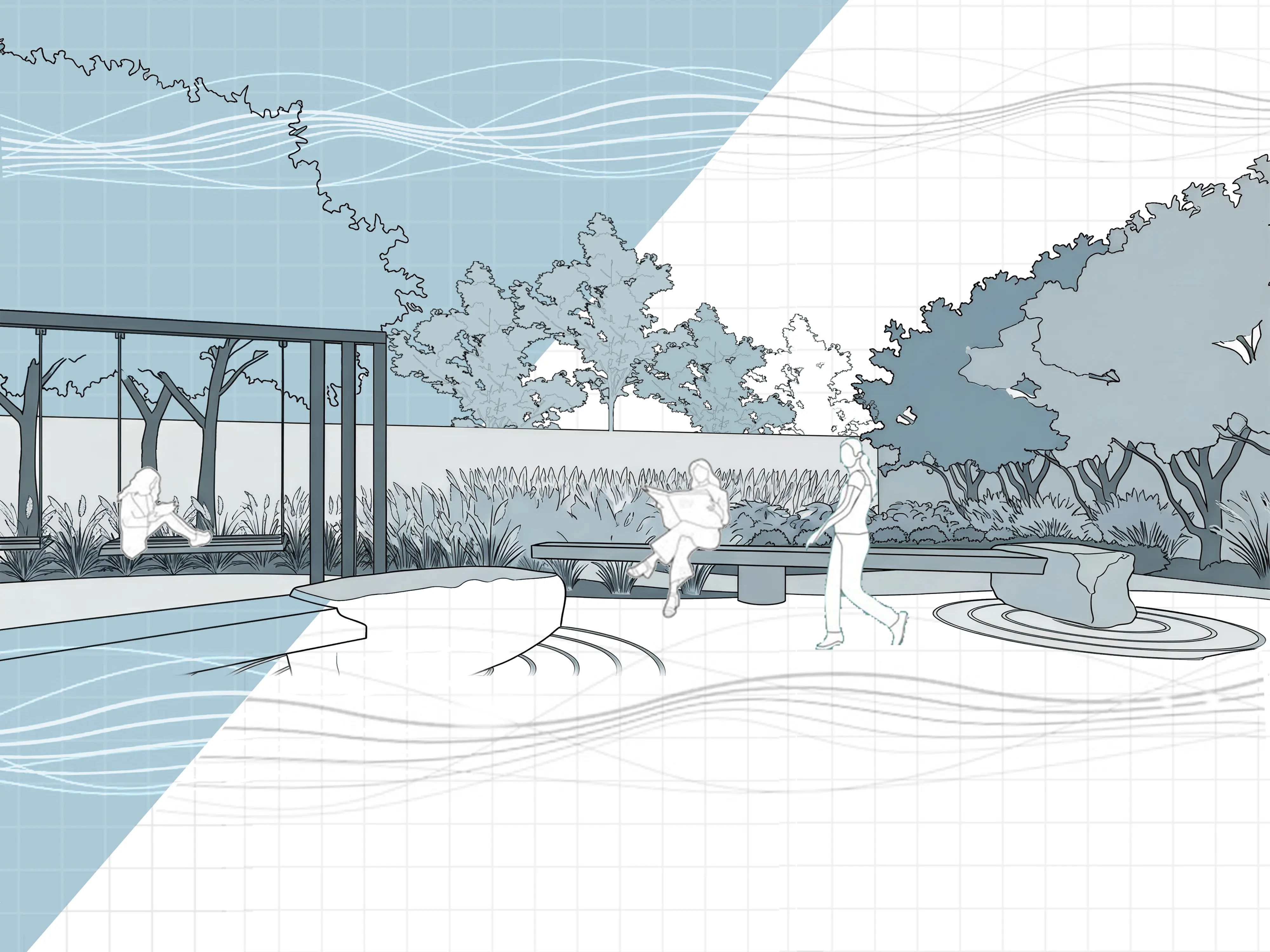
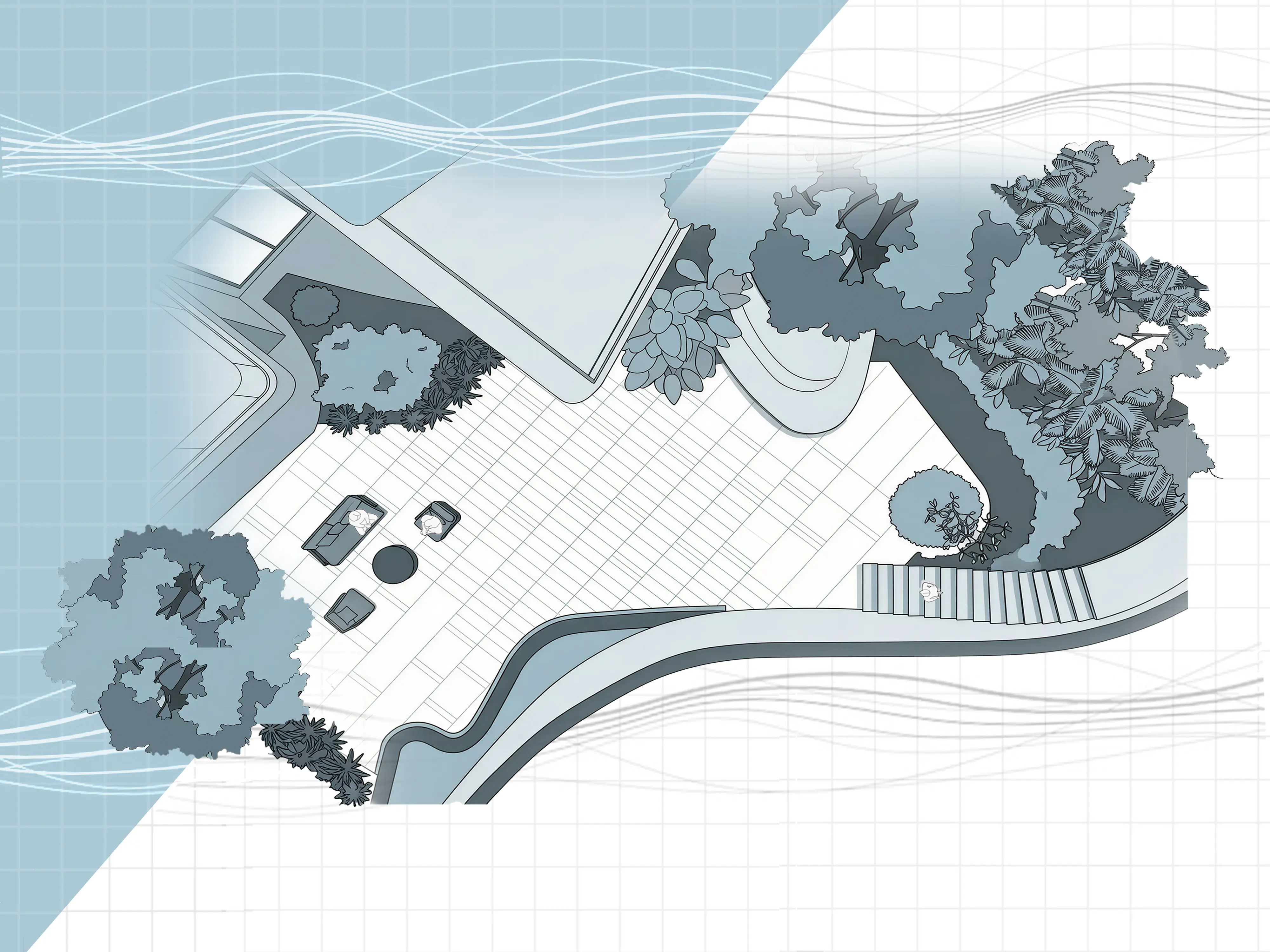
The spatial character of the campus is shaped through the interplay of two contrasting geometries—fluid serpentine forms and deliberate angular alignments. This duality reflects a balance between movement and order within the institutional environment. Curvilinear spaces soften the built edges of the architecture, creating informal pockets for gathering and pause, while the angular landscapes respond to the orthogonal structure of the academic blocks. Together, these geometries establish a landscape that is both dynamic and structured, allowing the open spaces to become an extension of learning, interaction, and everyday campus life.
design
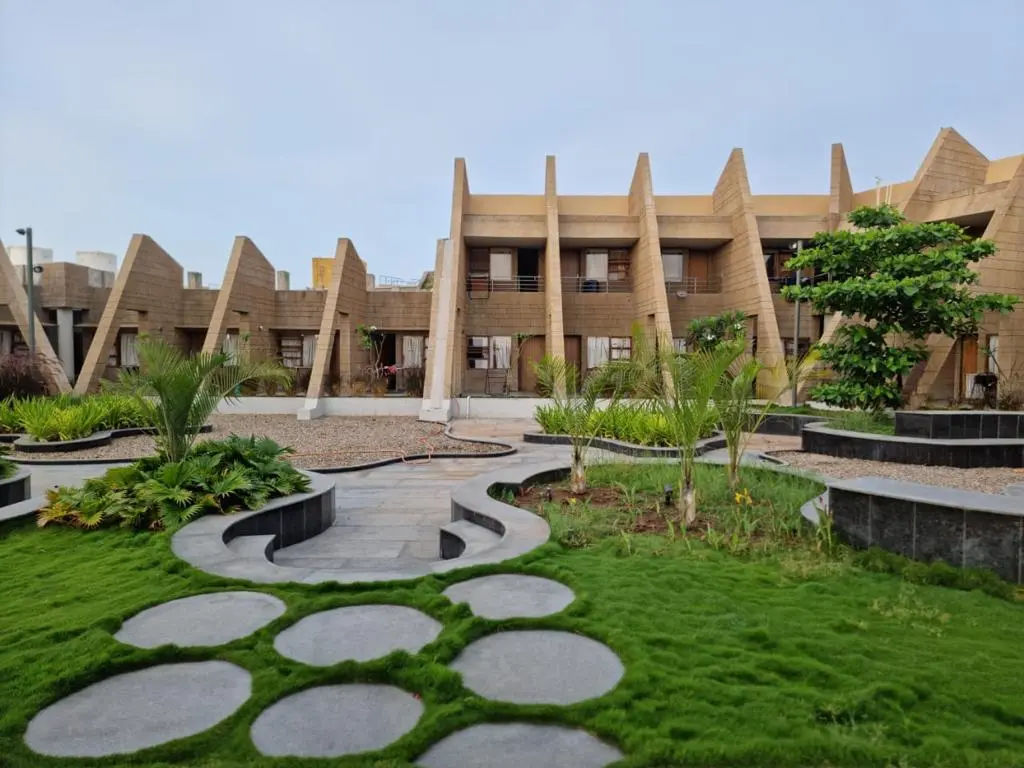
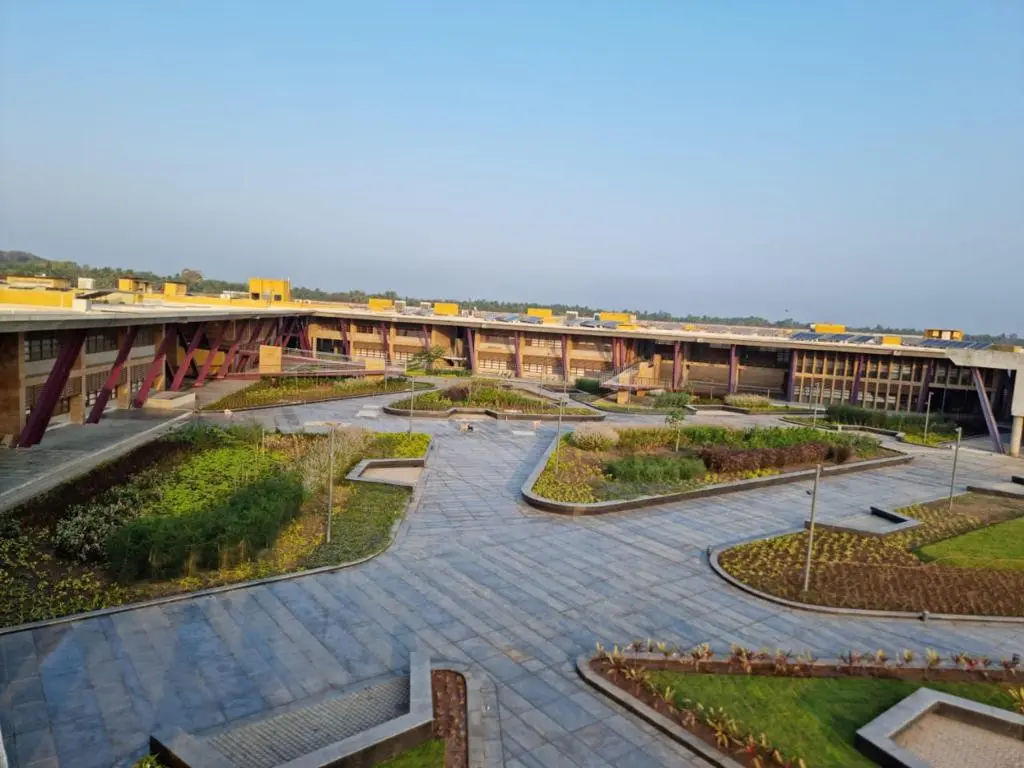
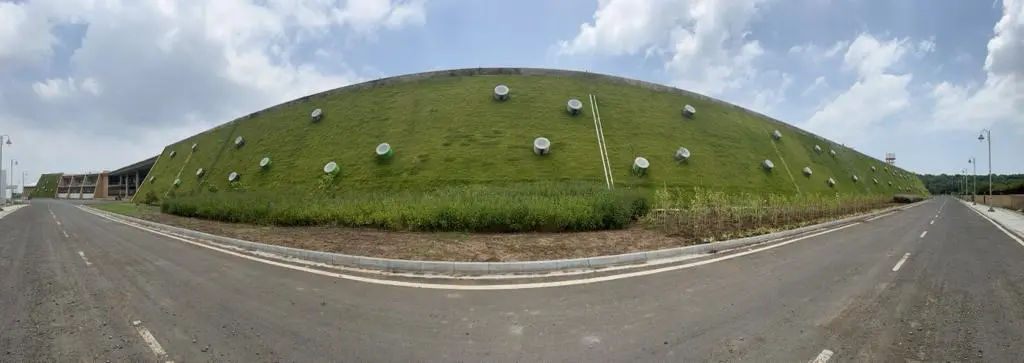
The landscape framework organizes the open spaces into distinct yet interconnected zones defined by their geometry. A series of serpentine seating edges and planters create flowing outdoor courts that encourage informal interaction and visual continuity across the site. In contrast, the angular pathways and planted terraces align with the architectural grid, providing clear circulation routes and spatial definition. A prominent green wall near the entrance introduces a strong visual landmark, where natural lawn has been established on the slope, reinforced by layered planting of grasses and shrubs at its base to stabilize and soften the edge. Planting beds are arranged as sculpted islands within paved plazas, creating a rhythm of green pockets across the campus while maintaining open gathering areas for institutional activities. The result is a landscape that mediates between architecture and terrain, offering both structured movement and relaxed spaces for occupation.
Click to view
Click to view
Click to view
Click to view
Click to view
project details
location
diu
typology
public landscape
status
Completed
additional disciplines
Landscape
year
2022
similar projects
maheshwari residence
Indore,madhya pradesh • 2025
ub heritage corporate
ahmedabad,gujarat • 2024
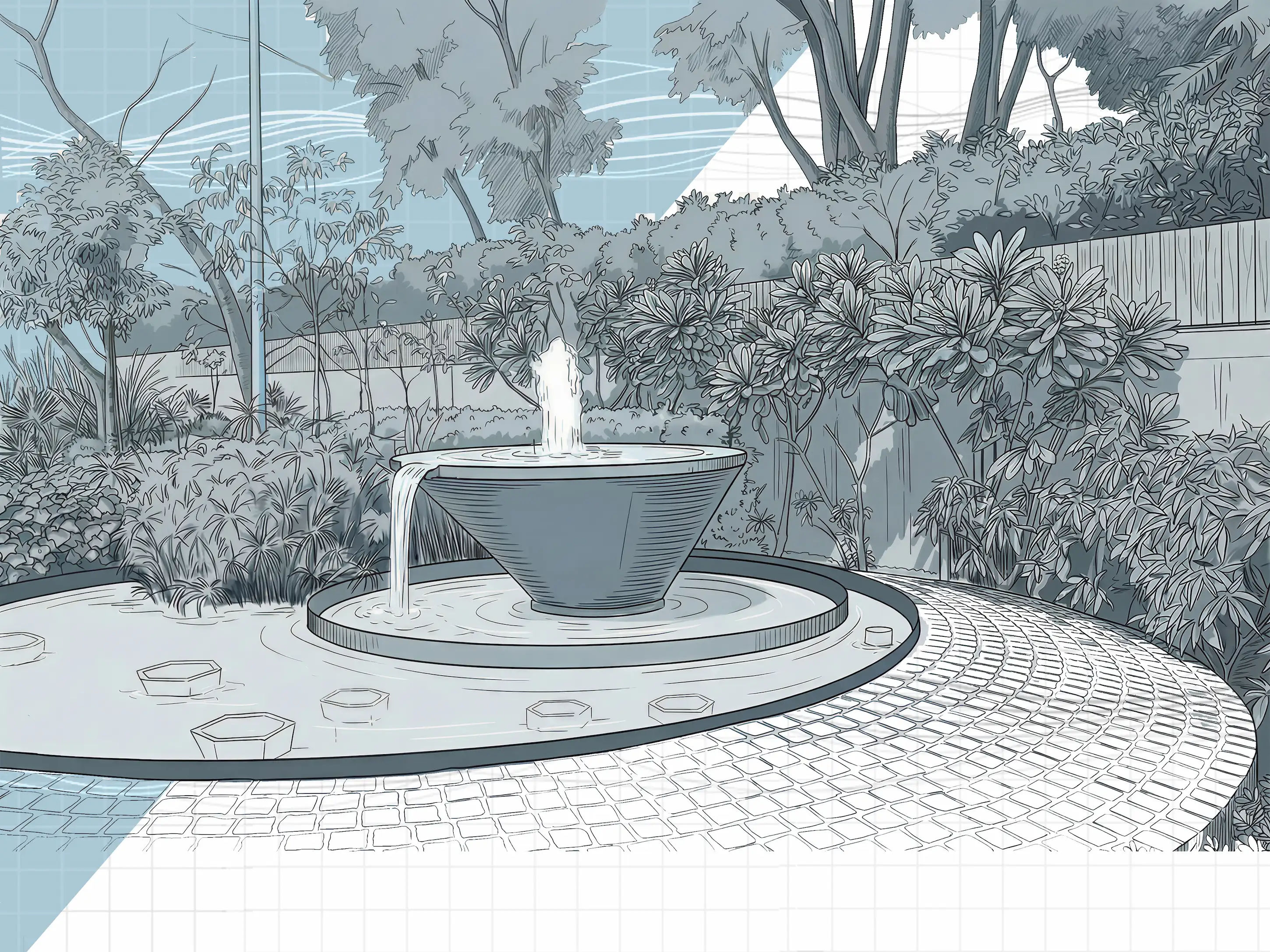
sharda house
ahmedabad,gujarat • 2019
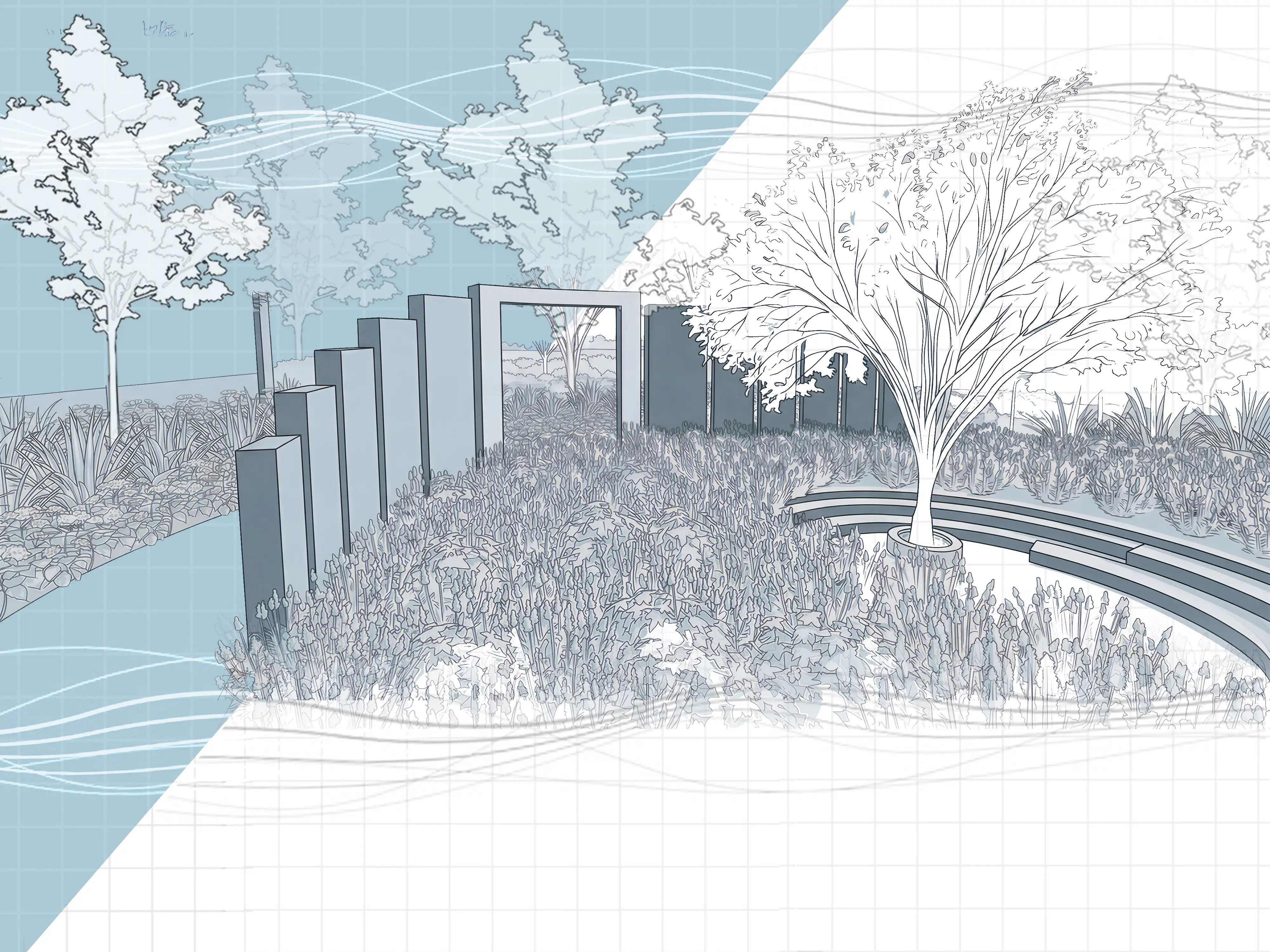
shanti niwas
ahmedabad,gujarat • 2020
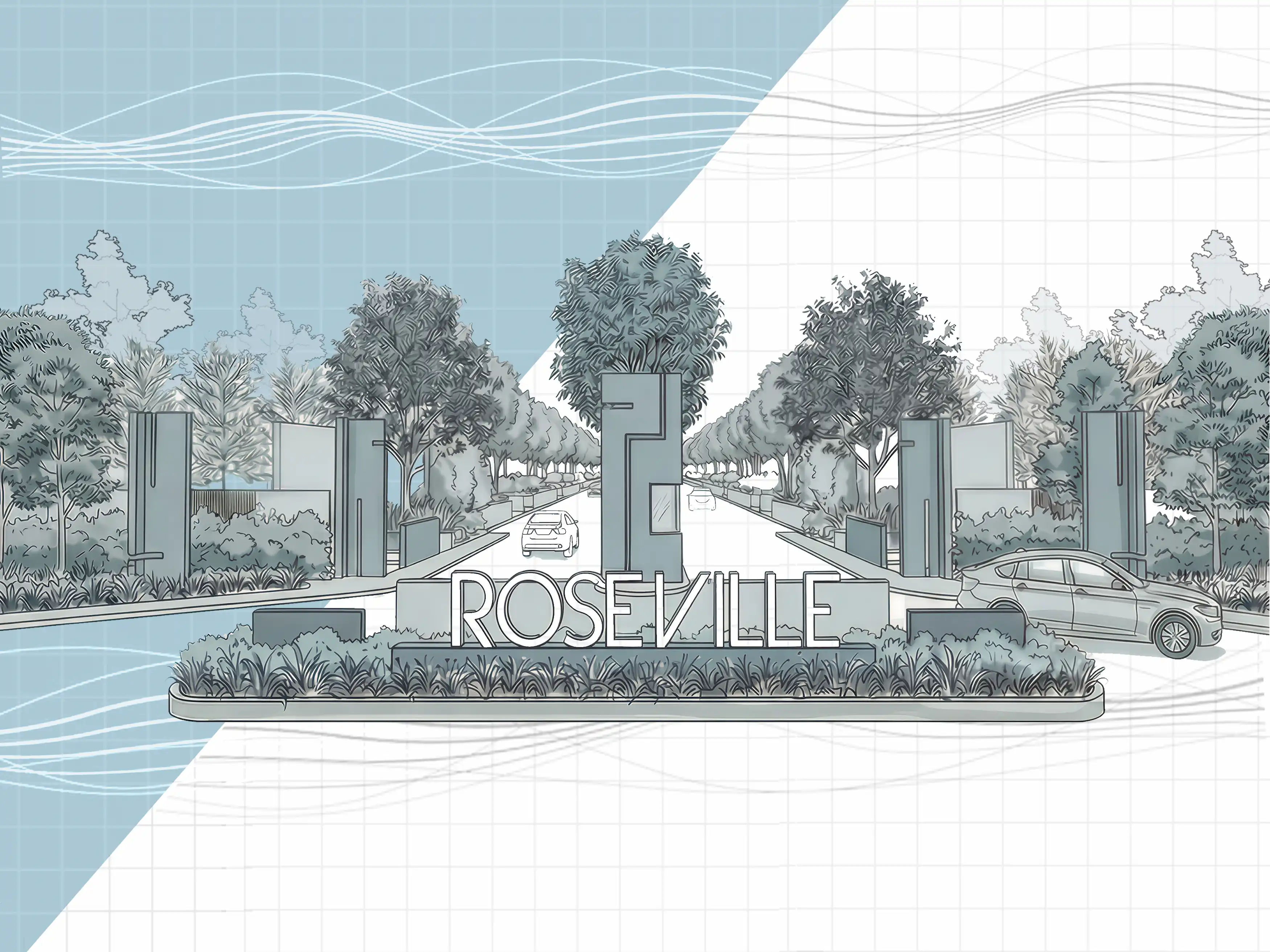
roseville
ahmedabad,gujarat • 2024
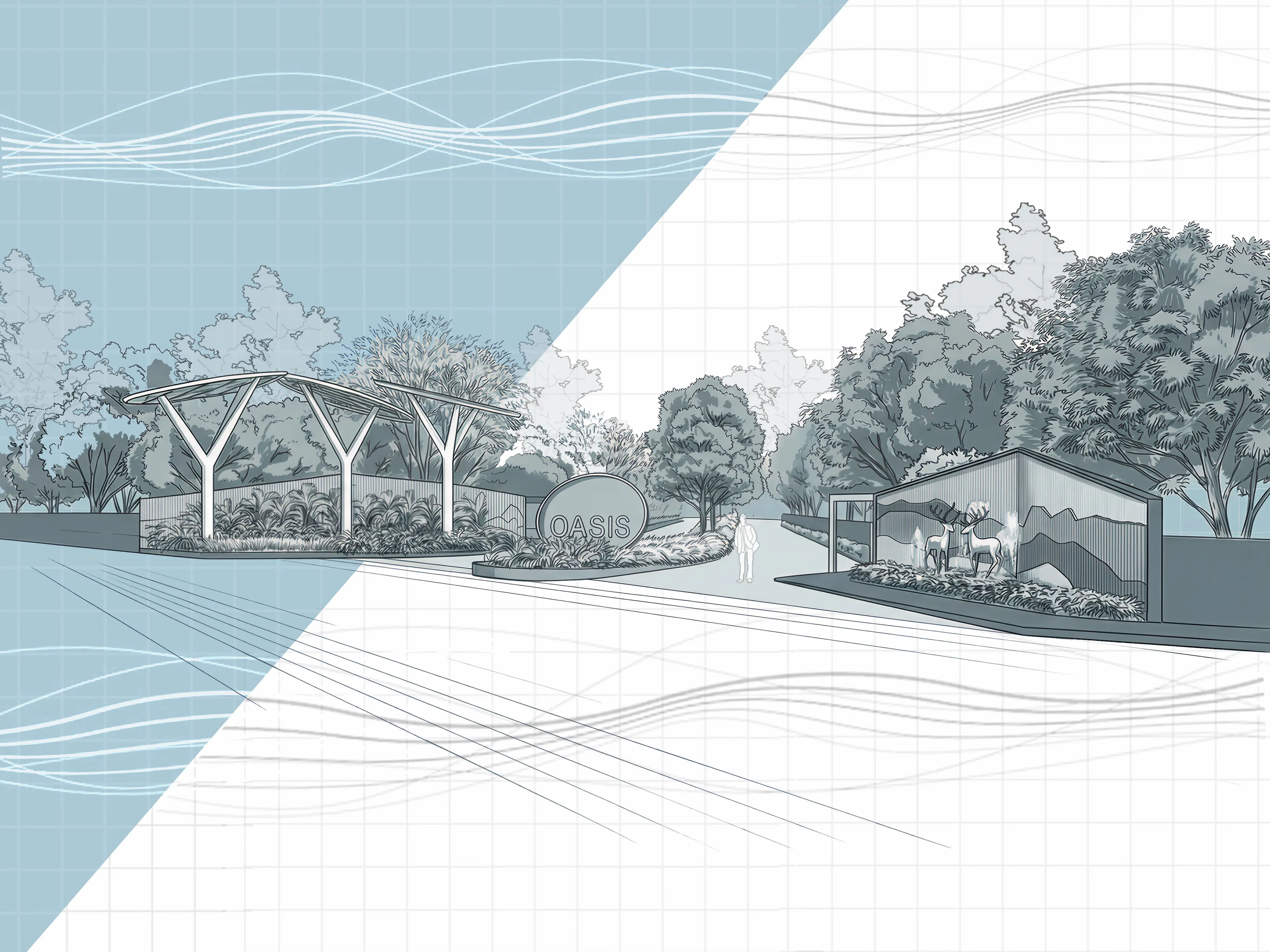
ratnaakar oasis
ahmedabad,gujarat • 2023
pankajbhai farmhouse
ahmedabad,gujarat • 2025
nine x nine
gandhinagar,gujarat • 2023
sandhan
sandhan
loading projects…